
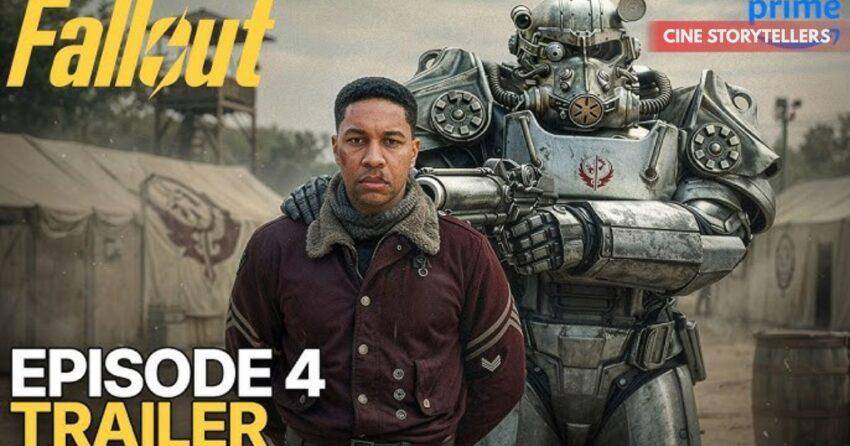
Fallout Season 2 Episode 4 feels like a turning point — not because of massive explosions or shocking deaths alone, but because of the quiet, unsettling changes happening inside its characters. Lucy is no longer the hopeful Vault Dweller we first met. Maximus is no longer blindly loyal to the Brotherhood of Steel. And the wasteland itself feels colder, crueler, and more morally complicated than ever. This episode slows the pace just enough to let those transformations sink in, making it one of the most important chapters of the season so far.
A Different Kind of Fallout Episode


Episode 4 doesn’t try to overwhelm you with nonstop action. Instead, it leans into tension, discomfort, and consequence. It’s the kind of episode that might not feel explosive while you’re watching it, but lingers afterward because of what it means for the story.
This is Fallout at its most introspective. Survival isn’t just about weapons and armor anymore — it’s about what kind of person you’re willing to become when the world keeps stripping pieces of you away.
Lucy’s Transformation Is No Longer Subtle
Lucy has been changing since Season 1, but Episode 4 makes that evolution impossible to ignore. She’s angrier, sharper, and far more willing to act first and reflect later. Her time in the wasteland — especially her recent trauma — has taken a visible toll.
One of the smartest choices this episode makes is showing Lucy’s struggle through behavior rather than exposition. She’s restless. She snaps at people who try to help her. She makes reckless decisions and then doubles down instead of apologizing. This isn’t the wide-eyed optimist anymore — this is someone who’s learned that kindness can be dangerous.
What makes it compelling is that the show doesn’t judge her. It lets the audience wrestle with whether this new Lucy is stronger… or simply harder.
Also Read : The Rookie Season 8 Premiere: Release Date, Cast, Plot & Where to Watch
Addiction, Survival, and Moral Drift
Lucy’s reliance on performance-enhancing drugs isn’t played for shock value. It’s portrayed as practical, messy, and deeply human. In the wasteland, tools aren’t just weapons — sometimes they’re chemicals that keep you standing when your body and mind want to collapse.
This storyline works because it mirrors a central Fallout theme: survival often comes at a moral cost. Lucy doesn’t see herself as addicted; she sees herself as prepared. But the line between those two ideas gets thinner every episode.
It raises an uncomfortable question: if the wasteland rewards ruthless behavior, is it really wrong to embrace it?
The Ghoul: A Mirror Lucy Doesn’t Like Looking Into
The Ghoul continues to be one of the show’s most effective narrative devices. In Episode 4, he’s less of a chaotic wildcard and more of a walking warning sign.
He recognizes what Lucy is becoming because he’s already been there. His reactions aren’t judgmental — they’re resigned. There’s an unspoken understanding between them that feels heavier than any argument. The Ghoul isn’t trying to save Lucy. He knows better. He’s simply watching to see how far she’ll go.
Their dynamic adds emotional weight to the episode. It’s not just about where they’re traveling — it’s about whether Lucy will end up like him by the time she gets there.
Maximus Faces the Cost of Obedience
While Lucy wrestles with internal change, Maximus confronts external authority. Episode 4 puts him in direct conflict with the Brotherhood of Steel’s rigid ideology, forcing him to choose between orders and conscience.
His decision to protect innocent lives — even when it means turning against his own — marks a defining moment. This isn’t rebellion for rebellion’s sake. It’s the realization that blind loyalty can be just as destructive as chaos.
Maximus has always wanted to belong. Episode 4 asks whether belonging is worth becoming someone you hate.
The Brotherhood of Steel Starts to Crack
The Brotherhood has never been portrayed as purely heroic in Fallout, but this episode sharpens its moral edges. Internal tension simmers beneath the surface, and it’s clear that ideological fractures are forming.
What makes this compelling is that the Brotherhood doesn’t see itself as evil. It sees itself as necessary. Episode 4 highlights how dangerous that mindset can be, especially in a world where power is justified by survival.
Maximus stands at the center of that tension, and it’s clear he won’t be able to stay neutral for long.
Also Read : Where Is Andrea Yates Now? Inside Her Life After the 2001 Tragedy
New Vegas Looms Large
Even when it’s not fully on screen, New Vegas hangs over this episode like a promise and a threat. Characters talk about it with a mix of hope, fear, and myth — exactly how Fallout locations should feel.
The closer the story gets to New Vegas, the more dangerous the world becomes. Episode 4 smartly uses anticipation rather than spectacle, letting the audience feel that something big — and likely terrible — is waiting just ahead.
Pacing That Serves the Story
Some viewers may find Episode 4 slower than previous chapters, but that pacing is intentional. This is a character episode, not a spectacle episode. It takes time to sit with decisions, reactions, and consequences.
By the end, the emotional groundwork laid here makes future conflicts feel earned. Fallout understands that action only matters when we care who’s pulling the trigger — and why.
Themes That Hit Harder Than Explosions
Episode 4 is packed with Fallout’s signature themes, but they’re explored in quieter, more unsettling ways:
- Identity vs. Survival: How much of yourself can you lose and still recognize who you are?
- Authority vs. Morality: When does following orders become a form of cruelty?
- Adaptation vs. Corruption: Is becoming harder the same as becoming worse?
These questions don’t have easy answers, and the episode doesn’t pretend they do.
Performances That Elevate the Material
The acting in Episode 4 deserves special praise. Lucy’s performance captures exhaustion, anger, and resolve without ever feeling exaggerated. Maximus’ internal conflict feels raw and believable, especially in moments where silence says more than dialogue.
The Ghoul continues to steal scenes simply by existing — a reminder of what the wasteland ultimately does to people who survive it too long.
Why Episode 4 Matters So Much
Not every episode needs to be a crowd-pleasing highlight. Some episodes exist to reshape the story, and Episode 4 does exactly that.
After this chapter, the characters can’t go back to who they were. Lines have been crossed. Beliefs have been challenged. And the wasteland feels less like an obstacle and more like an active force shaping everyone within it.
That’s good storytelling — and very true to Fallout.
Final Verdict: Quiet, Dark, and Essential
Fallout Season 2 Episode 4 may not be the loudest or flashiest episode, but it’s one of the most important. It deepens character arcs, challenges moral assumptions, and prepares the ground for major conflicts ahead.
If the rest of the season builds on what this episode sets up, Fallout isn’t just telling a post-apocalyptic story — it’s telling a human one, with all the discomfort that comes with it.
Also Read : Chris Redd Opens Up About Pill Abuse at SNL: What He Said and Why It Matters
FAQs
What is Fallout Season 2 Episode 4 about?
Episode 4 focuses on Lucy’s psychological transformation, Maximus’ moral conflict within the Brotherhood of Steel, and the growing dangers of the wasteland as the story moves closer to New Vegas.
Is Lucy becoming a villain in Season 2?
Not exactly. Lucy is becoming morally gray, shaped by trauma and survival. The show presents her evolution as complex rather than heroic or villainous.
Why is Episode 4 slower than other episodes?
This episode prioritizes character development and thematic depth over action, setting up emotional and narrative payoffs for later episodes.
What happens with the Brotherhood of Steel?
Internal tensions increase, and Maximus begins to openly challenge the Brotherhood’s ideology, hinting at a larger conflict ahead.
Is New Vegas important this season?
Yes. New Vegas is positioned as a major narrative destination, with Episode 4 building anticipation and tension around its eventual arrival.
Is Episode 4 worth watching?
Absolutely. While quieter than some episodes, it’s essential for understanding the characters’ transformations and the season’s larger direction.
Join our WhatsApp channel for more updates and information about celebrities and entertainment.


I’m Atul Kumar, founder of Cine Storytellers and an entertainment creator with 5+ years of experience. I cover films, celebrities, music, and OTT content with a focus on accurate, ethical, and engaging storytelling. My goal is to bring readers trustworthy entertainment news that informs, inspires, and goes beyond gossip.