

No Other Choice, directed by Park Chan‑wook, is a darkly comedic and visually stunning exploration of work, identity, and desperation. Starring Lee Byung‑hun as Man‑su, a middle-aged office worker suddenly unemployed, the film traces his descent into morally extreme actions to maintain dignity and security. Blending satire, thriller elements, and biting social commentary, the film examines the pressures of modern capitalism while delivering razor-sharp humor and psychological intensity. This review dives into the plot, performances, thematic depth, and cultural relevance, giving you everything you need to know about Park’s latest cinematic triumph.
Park Chan‑wook’s Return to Sharp Social Commentary

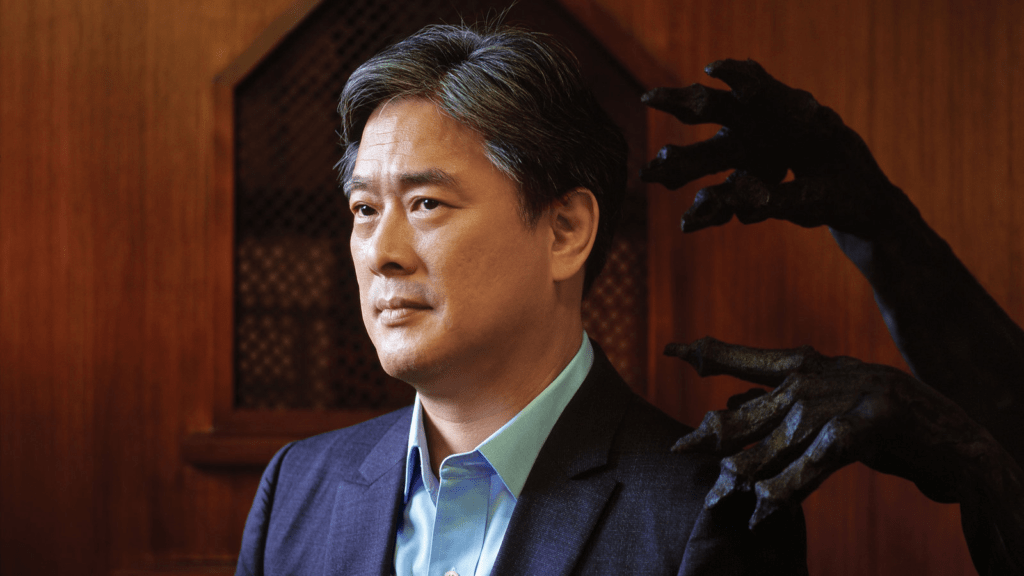
Park Chan‑wook, the visionary director behind Oldboy, The Handmaiden, and Decision to Leave, is renowned for blending visually striking cinema with intricate psychological narratives. No Other Choice continues this tradition but with a satirical lens.
Set against the pressures of a modern economy, the film takes a sharp, often absurdist look at unemployment, social expectations, and the lengths people go to preserve dignity. Park himself described the project as a long-gestating story he has wanted to adapt for decades, inspired by Donald Westlake’s novel The Ax — but updated for a 2025 world dominated by automation, corporate mergers, and economic uncertainty.
Unlike his previous films, No Other Choice leans more heavily into black comedy, turning a grim premise into an exploration that is as funny as it is uncomfortable.
Plot Overview: A Man Pushed to Extremes
The story follows Yoo Man‑su (Lee Byung‑hun), a dedicated office worker who has spent decades in the same job at a mid-sized paper company. Early scenes establish a seemingly stable life: a caring family, a comfortable home, and daily routines that give him identity and security.
Everything unravels when Man‑su is unexpectedly laid off due to corporate downsizing. Facing mounting bills, societal pressure, and the fear of losing his purpose, he embarks on an extreme plan: instead of competing fairly for scarce jobs, he decides to remove his competition — literally.
From there, the film spirals into a darkly comedic series of schemes, misadventures, and increasingly absurd scenarios. Each plot twist exposes not only Man‑su’s ingenuity and desperation but also broader societal pressures on people in precarious positions.
Lee Byung‑hun Shines in the Lead Role
Lee Byung‑hun delivers a nuanced performance that anchors the film. His portrayal of Man‑su balances empathy with unease. Viewers feel for a man pushed to extremes while also confronting the moral implications of his choices.
His performance captures the tension of modern life — the constant need to succeed, to provide, and to maintain self-worth in an unforgiving society. He is both relatable and unnerving, a protagonist whose actions provoke laughter and reflection simultaneously.
Supporting him, Son Ye‑jin plays Miri, Man‑su’s wife, who grounds the story in emotional reality. Her perspective highlights the personal and familial consequences of Man‑su’s drastic decisions, giving the audience a moral compass amid the absurdity.
Also Read : Taylor Swift Docuseries The End of an Era: Indianapolis Shoutout Explained
A Darkly Comedic Approach to Modern Anxiety
What sets No Other Choice apart is its unique tonal balance. While the premise is extreme — a man plotting against his professional rivals — Park Chan‑wook infuses the narrative with humor, satire, and surreal visual flourishes.
Scenes of Man‑su preparing for his schemes are simultaneously tense and absurd. From elaborate disguises to slapstick mishaps, the film maintains a playful rhythm while exploring serious social anxieties. This combination of comedy and dark realism makes the satire resonate: it’s a reflection of the absurdity many feel navigating modern work life.
Social Commentary: Capitalism and Job Insecurity
At its core, No Other Choice is a biting critique of modern capitalism and the precarity of employment. It examines how societal and economic pressures can push ordinary individuals to extreme measures.
- Job insecurity: The film portrays the fear of losing status and income, highlighting the psychological toll of sudden unemployment.
- Automation and economic change: By depicting a rapidly evolving corporate landscape, the story reflects 2025 anxieties about technology replacing human labor.
- Identity and self-worth: Man‑su’s extreme actions underscore how work defines identity in contemporary society, and the existential crises that arise when that identity is threatened.
Park’s adaptation goes beyond mere suspense or black comedy — it uses narrative absurdity to comment on the real challenges facing modern workers.
Visual Style: Cinematic Precision Meets Absurdity
Cinematographer Kim Woo‑hyung creates striking imagery that reinforces both humor and tension. Long, meticulously framed shots contrast with chaotic sequences, emphasizing Man‑su’s psychological unraveling.
- Framing and symmetry: Even in moments of absurdity, each shot feels deliberate, enhancing narrative impact.
- Lighting and color: Shadows, muted palettes, and sudden bursts of color underscore the film’s tonal swings from comedy to dread.
- Physical comedy: The cinematography amplifies Man‑su’s awkward maneuvers, making his schemes visually entertaining while highlighting his desperation.
This combination of style and substance is classic Park Chan‑wook — meticulous, playful, and thematically resonant.
Festival Buzz and Critical Reception
No Other Choice premiered at the 82nd Venice International Film Festival, earning immediate acclaim for its blend of satire, thriller elements, and social commentary. Audience reactions ranged from laughter to shock, reflecting the film’s layered impact.
It also received the International People’s Choice Award at TIFF and won the Audience Award at SCAD Savannah Film Festival, signaling its broad appeal. Critics have praised Lee Byung‑hun’s performance, Park’s direction, and the film’s ability to balance humor with thought-provoking critique.
Also Read : Where Is Kristin Cabot Now? Life After the Viral Coldplay Kiss Cam Moment
Themes That Resonate in 2025
While a compelling thriller and comedy, No Other Choice is culturally significant for its reflection of contemporary anxieties:
- Economic precarity: Many viewers relate to the fear of sudden unemployment or irrelevance.
- Moral compromise under pressure: The film asks how far individuals might go to preserve dignity and survival.
- Absurdity of modern work life: By exaggerating workplace competition, the film humorously mirrors real societal pressures.
Its thematic relevance extends beyond Korea, resonating with global audiences navigating uncertainty in post-pandemic, automation-driven economies.
Why Park Chan‑wook’s Satire Works
The success of No Other Choice lies in Park’s ability to blend:
- Genre mastery: Combining thriller, black comedy, and social satire into a cohesive narrative.
- Emotional depth: Balancing humor with empathy for Man‑su’s plight.
- Visual storytelling: Using cinematography and mise-en-scène to enhance thematic impact.
- Cultural critique: Turning entertainment into commentary on capitalism, identity, and survival.
This mix ensures the film is both entertaining and intellectually stimulating — a rare combination that appeals to critics and audiences alike.
Comparison to Other Works
While comparisons to Bong Joon Ho’s Parasite are inevitable, No Other Choice distinguishes itself through:
- More overt absurdity and satire
- Focus on individual moral dilemmas rather than family dynamics
- Emphasis on humor alongside social critique
It’s a distinctly Park Chan‑wook film: meticulous, visually stunning, morally complex, and darkly funny.
Final Thoughts
No Other Choice is one of 2025’s most compelling films, a dark comedy thriller that entertains while prompting reflection on societal pressures and human morality. With a powerhouse performance from Lee Byung‑hun, Park Chan‑wook’s signature style, and biting social satire, the film leaves viewers both amused and unsettled — a rare combination that marks it as a must-see of the year.
Whether you’re drawn to psychological thrillers, dark comedies, or films that challenge your perception of morality, No Other Choice is a cinematic experience that lingers.
Also Read : Bowen Yang Leaving Saturday Night Live Midseason: Why the SNL Star Is Stepping Away Now
FAQs
What is No Other Choice about?
A laid-off office worker resorts to extreme measures to eliminate job competition, exploring themes of desperation, identity, and societal pressure.
Who directed the film?
Park Chan‑wook, the South Korean auteur known for Oldboy and The Handmaiden.
Who stars in the film?
Lee Byung‑hun leads as Man‑su, with Son Ye‑jin in a supporting role as his wife.
What themes does the movie explore?
Job insecurity, capitalism, identity, morality, and human survival under pressure.
Has the film received awards?
Yes — including the International People’s Choice Award at TIFF and audience recognition at multiple film festivals.
Join our WhatsApp channel for more updates and information about celebrities and entertainment.


I’m Atul Kumar, founder of Cine Storytellers and an entertainment creator with 5+ years of experience. I cover films, celebrities, music, and OTT content with a focus on accurate, ethical, and engaging storytelling. My goal is to bring readers trustworthy entertainment news that informs, inspires, and goes beyond gossip.