

In a compelling conversation featured by ABC News, filmmaker Rory Kennedy and chess legend Judit Polgár unpack the meaning behind Queen of Chess—a powerful exploration of brilliance, bias, and breaking barriers. This article dives deep into Polgár’s extraordinary journey, Kennedy’s motivation for telling the story, and why Judit Polgár remains one of the most influential minds in chess history. More than a profile, this is a story about rewriting the rules—on the board and beyond.
Why “Queen of Chess” Is More Than a Chess Story

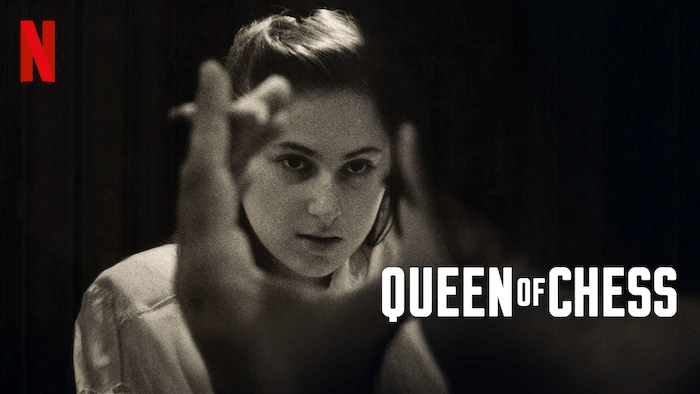
At first glance, Queen of Chess may sound like a film meant for chess enthusiasts. But Rory Kennedy’s work, combined with Judit Polgár’s life story, quickly proves otherwise. This is not just about strategy, openings, or checkmates. It’s about what happens when raw genius collides with rigid tradition—and wins.
The film and the surrounding conversation focus on how Polgár didn’t simply succeed in chess; she challenged the very assumptions that shaped the game for centuries. Rory Kennedy frames this story not as an exception, but as evidence of what becomes possible when talent is allowed to grow without artificial limits.
Also Read : Scream 7 Trailer Unleashes Neve Campbell’s Return as Sidney Prescott
Who Is Judit Polgár?
Judit Polgár is widely regarded as the greatest female chess player of all time—but even that label undersells her achievements. She didn’t dominate women’s chess; she rejected the separation entirely.
From a young age, Polgár competed almost exclusively against men, eventually defeating multiple world champions. At her peak, she ranked among the top ten players in the world overall—a feat no other woman has matched.
Her career shattered the long-standing belief that women could not compete with men at the highest intellectual levels of the game.
A Childhood Built Around Brilliance
Polgár’s rise was no accident. Raised in Hungary, she was part of an unconventional educational experiment led by her father, who believed that “geniuses are made, not born.” Along with her sisters, Judit was trained intensely in chess from an early age.
But what made Judit different was not just preparation—it was fearlessness. She played aggressively, attacked relentlessly, and never approached the board with inferiority. That mindset would define her entire career.
Rory Kennedy’s Vision as a Storyteller
Rory Kennedy is known for choosing subjects that sit at the intersection of power, injustice, and untold truth. In Queen of Chess, she saw an opportunity to challenge deeply ingrained gender narratives using a real-life example that no one could dismiss.
Kennedy doesn’t portray Polgár as a symbolic figure or a token success story. Instead, she presents her as what she truly is: a generational talent whose accomplishments forced the chess world to confront its own biases.
Breaking the Gender Barrier in Chess
For decades, chess institutions operated on the assumption that men were naturally better players. Women’s tournaments existed not to elevate women, but to separate them.
Polgár rejected that logic entirely. She refused to compete for the Women’s World Championship, insisting that true equality meant competing with the best—period.
Her victories against elite male players didn’t just earn respect; they dismantled excuses.
The Psychological Cost of Being “The Only One”
One of the most powerful elements discussed by Kennedy and Polgár is the psychological toll of being constantly underestimated. Every match came with extra pressure—not just to win, but to represent an entire gender.
Polgár has spoken openly about how exhausting it was to carry expectations that had nothing to do with chess skill. Yet she never allowed that burden to alter her playing style or ambition.
Style Over Stereotype
Judit Polgár’s playing style was aggressive, creative, and deeply tactical—traits often (and incorrectly) described as “masculine” in chess commentary.
Rory Kennedy highlights how even language played a role in bias. When Polgár attacked, it was framed as surprising. When men did the same, it was expected.
Her success forced commentators and analysts to rethink not only their assumptions about gender, but also how they described excellence.
Why This Story Matters Now
In a world still grappling with gender inequality across industries, Queen of Chess feels especially timely. Polgár’s story resonates beyond chess—it speaks to science, business, technology, and any field where women are still told they don’t belong at the top.
Rory Kennedy uses chess as a lens to examine how systems quietly discourage talent by labeling it “unlikely.”
Judit Polgár’s Legacy Beyond Competition
Polgár retired from professional chess in 2014, but her influence has only grown since then. She has dedicated much of her life to education, promoting chess as a tool for critical thinking and problem-solving in schools.
Her work emphasizes access over elitism—another challenge to traditional chess culture.
Rewriting the Narrative for Future Generations
One of the most hopeful aspects of Queen of Chess is its forward-looking message. Polgár doesn’t dwell on resentment or lost opportunities. Instead, she focuses on ensuring that future generations won’t face the same barriers.
Kennedy captures this optimism beautifully, framing Polgár not just as a pioneer, but as a builder of better systems.
Also Read : Amy Redford on Robert Redford’s Death: Daughter’s Emotional Interview
Chess as a Mirror of Society
Throughout the conversation, chess emerges as a metaphor for society itself—structured, hierarchical, and resistant to change. Polgár’s journey shows that talent alone isn’t always enough; opportunity and belief matter just as much.
Kennedy’s storytelling invites viewers to ask uncomfortable questions: How many Judit Polgárs were never given a board?
Media Representation and Responsibility
Another subtle but important theme is how media shapes perception. For years, Polgár was described as “the best female player” rather than simply “one of the best players.”
Kennedy challenges this framing, reminding audiences that language influences how seriously people are taken.
Why Rory Kennedy and Judit Polgár Are a Perfect Match
The collaboration works because both women share a commitment to truth without embellishment. Kennedy doesn’t mythologize Polgár, and Polgár doesn’t soften her experiences.
Together, they create a narrative that is honest, empowering, and deeply human.
Cultural Impact Beyond the Chessboard
Since its release and promotion, Queen of Chess has sparked renewed conversations about equality in intellectual sports. Young players—especially girls—are discovering Polgár not as an anomaly, but as proof of what’s possible.
That cultural shift may be her greatest victory.
The Quiet Power of Excellence
Perhaps the most striking lesson from Judit Polgár’s story is that she never asked for permission. She didn’t demand inclusion through protest; she earned it through excellence.
Rory Kennedy’s work honors that approach while still exposing the unfairness Polgár had to overcome.
Also Read : Amy Redford on Robert Redford’s Death: Daughter’s Emotional Interview
FAQs
What is Queen of Chess about?
Queen of Chess explores the life and legacy of Judit Polgár, focusing on how she challenged gender norms and became one of the greatest chess players in history.
Why is Judit Polgár so important in chess history?
She is the strongest female chess player ever and the only woman to consistently compete at the highest level against men, defeating multiple world champions.
Why did Rory Kennedy choose this subject?
Kennedy was drawn to Polgár’s story because it exposes how talent is often limited by social expectations rather than ability.
Did Judit Polgár compete in women-only tournaments?
She largely avoided women-only competitions, believing true equality meant competing in open events against the best players.
What is Judit Polgár doing now?
She focuses on chess education, youth development, and promoting critical thinking through the game.
Join our WhatsApp channel for more updates and information about celebrities and entertainment.


I’m Atul Kumar, founder of Cine Storytellers and an entertainment creator with 5+ years of experience. I cover films, celebrities, music, and OTT content with a focus on accurate, ethical, and engaging storytelling. My goal is to bring readers trustworthy entertainment news that informs, inspires, and goes beyond gossip.