
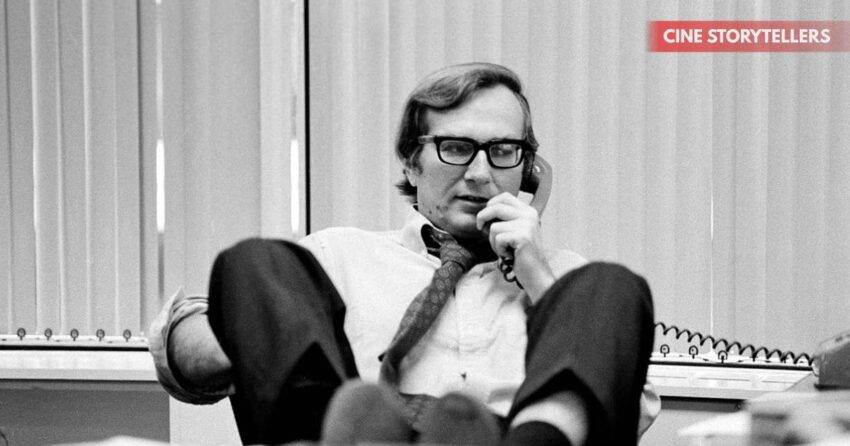
Netflix’s Cover-Up is not just another biographical documentary — it’s a powerful reminder of what fearless journalism looks like when truth is inconvenient. Centered on legendary investigative reporter Seymour Hersh, the film revisits decades of groundbreaking exposés while questioning how power, secrecy, and media accountability collide. With intimate access, sharp direction, and a sense of urgency that feels strikingly modern, Cover-Up stands out as one of the most compelling documentaries of the year.
What Cover-Up Is Really About

At its core, Cover-Up is a documentary about truth – how it’s uncovered, challenged, buried, and sometimes ignored. The film traces the extraordinary career of Seymour Hersh, the journalist responsible for exposing some of the most shocking stories in American history.
Rather than racing through a highlight reel, the documentary slows down and examines how Hersh worked. We see the obsessive note-taking, the skepticism toward official narratives, and the long stretches of uncertainty that come with investigative reporting. It’s not glamorous, and that’s exactly the point.
The film makes it clear early on: this is not about nostalgia. It’s about relevance.
Also Read : Chris Rea Dies at 74 – The Voice Behind “Driving Home for Christmas”
Seymour Hersh: A Complicated, Relentless Truth-Seeker
Seymour Hersh is portrayed not as a flawless hero, but as a deeply human figure — stubborn, sharp-tongued, and relentlessly curious. That honesty is one of Cover-Up’s greatest strengths.
The documentary revisits Hersh’s most famous investigations, including wartime atrocities and government misconduct, but it also explores the backlash he faced. Colleagues, editors, and critics weigh in, creating a portrait that feels balanced rather than worshipful.
What emerges is a journalist driven less by ideology and more by instinct – a refusal to accept official explanations without proof. Whether you agree with every conclusion Hersh has drawn over the years or not, the film makes a compelling case for why his work changed journalism forever.
Why the Timing of Cover-Up Feels So Urgent
Watching Cover-Up in 2025 feels different than it might have a decade ago. Trust in media is fractured. Misinformation spreads faster than facts. And institutions are more skilled than ever at controlling narratives.
The documentary doesn’t lecture, but it quietly asks uncomfortable questions:
Who holds power accountable when journalism is weakened?
What happens when whistleblowers are silenced?
And how much truth can survive in a media ecosystem built on speed rather than verification?
These questions linger long after the credits roll, making Cover-Up feel less like a history lesson and more like a warning.
Direction That Lets the Story Breathe
The filmmaking approach is restrained but effective. Instead of flashy visuals or dramatic reenactments, the documentary relies on archival footage, documents, and long, thoughtful interviews.
This choice pays off. By avoiding unnecessary dramatization, the film allows the weight of the material to speak for itself. The pacing is deliberate, but never dull. Each chapter builds naturally, creating a sense of momentum without sacrificing nuance.
The result is a documentary that trusts its audience — and that trust makes the experience more engaging.
A Rare Look Inside Investigative Journalism
One of Cover-Up’s most compelling aspects is how deeply it explores the process of investigative reporting. This isn’t just about breaking stories; it’s about chasing leads that might go nowhere, confronting editors who are hesitant to publish, and living with uncertainty.
The film shows how journalism isn’t about being first — it’s about being right. In an age dominated by hot takes and viral headlines, that message feels especially powerful.
For aspiring journalists, Cover-Up doubles as an unfiltered masterclass. For everyone else, it offers new appreciation for the work that happens behind the scenes.
Also Read : Blumhouse and Atomic Monster Cross $1 Billion at the Box Office in 2025 – How Horror Quietly Won the Year
Strengths That Set Cover-Up Apart
What helps Cover-Up stand out from similar documentaries is its refusal to simplify complex realities. It doesn’t pretend that journalism always leads to justice, or that truth automatically changes outcomes.
Instead, it acknowledges the limits of exposure. Some stories spark reform. Others fade quietly. The film suggests that the value of journalism isn’t measured only by results, but by persistence.
This honest framing gives the documentary emotional depth and intellectual credibility — two qualities often missing in modern true-story films.
Where the Documentary May Divide Viewers
Not everyone will agree with the film’s perspective, and that’s intentional. Some viewers may feel the documentary leans too sympathetically toward Hersh, while others may wish it challenged certain claims more aggressively.
But Cover-Up doesn’t aim for consensus. It invites debate. In doing so, it mirrors the very journalism it celebrates — uncomfortable, provocative, and resistant to easy answers.
That willingness to stir conversation may be one of its greatest achievements.
Why Cover-Up Is Worth Watching
Whether you’re deeply interested in journalism or simply enjoy documentaries that challenge conventional narratives, Cover-Up offers something substantial.
It’s thoughtful without being slow, critical without being cynical, and timely without being preachy. More importantly, it reminds viewers why truth-seeking — even when imperfect — remains essential.
In a year crowded with content, Cover-Up earns attention not through spectacle, but through substance.
Also Read : Gordon Ramsay Skin Cancer Diagnosis 2025: What You Need to Know
FAQs
What is Cover-Up on Netflix about?
Cover-Up is a documentary that examines the life and career of investigative journalist Seymour Hersh, focusing on his major exposés and the broader role of journalism in holding power accountable.
Is Cover-Up a biography or an investigative film?
It’s both. The film uses Hersh’s life as a framework while also exploring how investigative journalism works and why it remains essential.
Is the documentary biased toward Seymour Hersh?
The film presents Hersh in a largely sympathetic light but does not avoid criticism or controversy surrounding his work. It encourages viewers to engage critically.
Do you need prior knowledge of journalism to enjoy it?
Not at all. The documentary is accessible to general audiences and explains complex topics clearly without oversimplifying them.
Is Cover-Up worth watching in 2025?
Absolutely. Its themes around truth, power, and accountability feel especially relevant in today’s media landscape.
Join our WhatsApp channel for more updates and information about celebrities and entertainment.


I’m Atul Kumar, founder of Cine Storytellers and an entertainment creator with 5+ years of experience. I cover films, celebrities, music, and OTT content with a focus on accurate, ethical, and engaging storytelling. My goal is to bring readers trustworthy entertainment news that informs, inspires, and goes beyond gossip.