
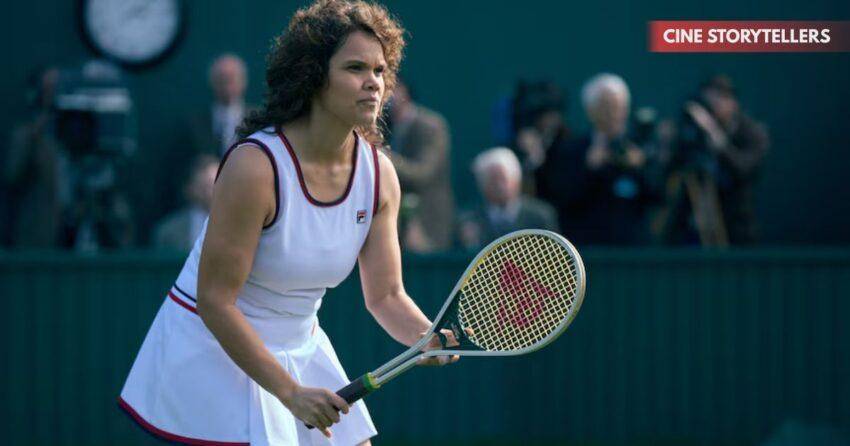
ABC’s Goolagong is a thoughtfully crafted television drama that tells the life story of Australian tennis legend Evonne Goolagong Cawley with emotional depth and cultural sensitivity. Rather than leaning on predictable sports-biopic formulas, the series focuses on identity, resilience, and belonging. With a powerful lead performance, careful direction, and a narrative rooted in lived experience, Goolagong succeeds as both an intimate character study and a broader social story. This review breaks down why the series resonates so strongly and why it deserves attention well beyond tennis fans.
A Sports Drama That Refuses to Be Predictable

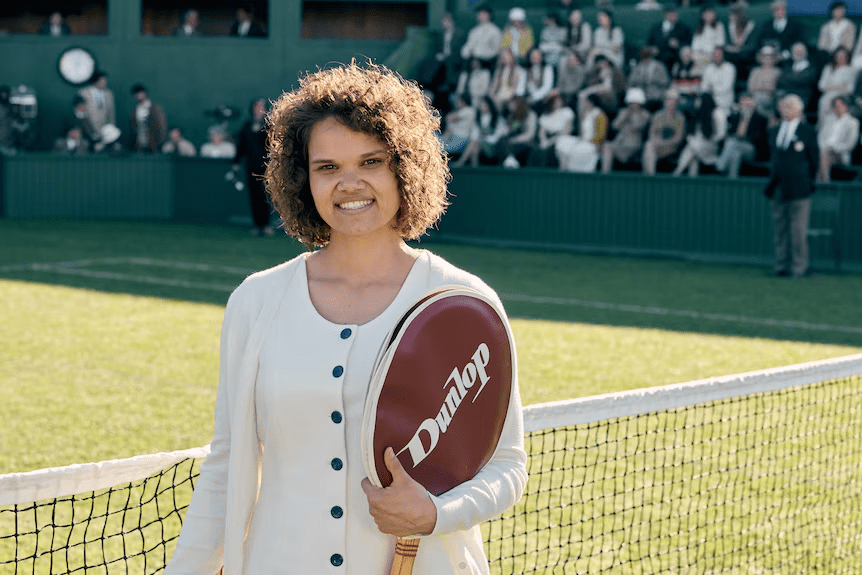
From the very first episode, Goolagong makes one thing clear: this is not a checklist-style sports biography. There are tennis matches, trophies, and global recognition — but they are never treated as the sole point of the story.
Instead, the series asks a deeper question: what does it cost to succeed when the world was never designed for you to win? That framing immediately separates Goolagong from countless sports dramas that rush toward glory without pausing to examine the emotional and cultural terrain beneath it.
The show moves at a deliberate pace, allowing viewers to sit with moments of doubt, isolation, joy, and quiet determination. It trusts the audience to care about Evonne as a person first, athlete second — a choice that pays off throughout the series.
Evonne Goolagong Cawley as a Fully Realized Human Being
One of the most refreshing aspects of Goolagong is how it portrays Evonne not as a flawless hero, but as a young woman navigating pressure, expectations, and identity.
We see her as a child discovering tennis almost by accident, as a teenager grappling with sudden attention, and as a global star who still feels caught between worlds. The series never rushes these transitions. Instead, it allows each stage of her life to inform the next, creating a sense of continuity that feels honest and earned.
This layered approach makes her victories more meaningful and her struggles more relatable. Even viewers unfamiliar with her real-world achievements quickly understand why her story matters.
A Breakout Lead Performance That Carries the Series
The success of Goolagong rests heavily on its lead performance — and it delivers. The actor portraying Evonne brings a quiet magnetism to the role, balancing physical confidence on the court with emotional restraint off it.
Rather than overplaying moments of triumph or hardship, the performance relies on subtlety: a pause before answering a question, a glance that reveals uncertainty, a restrained smile after a hard-fought win. These details give the character depth and credibility.
Importantly, the portrayal avoids imitation for imitation’s sake. Instead of trying to replicate every gesture of the real Evonne Goolagong Cawley, the performance captures her spirit — her calm focus, her resilience, and her understated strength.
Also Read : Netflix Top 10 Movies : Best Picks to Stream This Weekend
Direction That Lets the Story Breathe
The direction of Goolagong is confident without being flashy. Tennis sequences are filmed with clarity and elegance, but they never overwhelm the emotional narrative. Matches feel purposeful rather than obligatory, each one tied to a turning point in Evonne’s personal journey.
Off the court, the series excels in quieter moments: conversations at home, solitary training sessions, uncomfortable social interactions, and reflective pauses that say more than dialogue ever could. These scenes give the show its emotional weight.
The visual style is grounded and naturalistic, avoiding glossy overproduction. This choice reinforces the authenticity of the story and keeps the focus where it belongs — on character rather than spectacle.
Cultural Identity at the Heart of the Story
What truly elevates Goolagong is its commitment to placing Evonne’s success within its broader cultural context. The series does not shy away from the realities of growing up as an Indigenous Australian in a predominantly white sporting world.
Rather than turning these experiences into heavy-handed lessons, the show weaves them organically into the narrative. Moments of exclusion, misunderstanding, and subtle prejudice are presented matter-of-factly, allowing viewers to grasp their impact without being told how to feel.
This approach gives the series emotional credibility. It respects the audience’s intelligence while honoring the complexity of Evonne’s lived experience.
Supporting Characters That Feel Essential, Not Decorative
The people around Evonne are not reduced to stereotypes or plot devices. Coaches, family members, mentors, and partners are given space to exist as fully formed individuals with their own motivations and limitations.
Her coaching relationship, in particular, is portrayed with nuance — supportive at times, frustrating at others, and always shaped by power dynamics that evolve as her career progresses. These relationships add texture to the story and prevent it from becoming overly inward-focused.
Even minor characters feel purposeful, contributing to the sense that Evonne’s journey is shaped by community as much as individual talent.
Tennis as Metaphor, Not Just Sport
In Goolagong, tennis is more than competition — it’s a metaphor for balance, rhythm, and control. The show often mirrors Evonne’s internal state with her performance on the court, using wins and losses as emotional signposts rather than endpoints.
When she plays freely, her movement is fluid and confident. When doubt creeps in, the game tightens, mistakes multiply, and pressure mounts. This symbolic use of sport adds depth to the storytelling and reinforces the connection between mental resilience and physical excellence.
It’s a subtle technique, but one that enriches the viewing experience.
Avoiding the Trap of Myth-Making
Many biographical dramas fall into the trap of myth-making — sanding down flaws to present a simplified version of greatness. Goolagong resists that impulse.
The series acknowledges moments of controversy and complexity without sensationalizing them. Decisions are shown in context, shaped by limited options, conflicting advice, and personal uncertainty. This honesty makes the story feel credible and mature.
By refusing to present Evonne as either flawless or tragic, the show honors her humanity — and, in doing so, makes her achievements even more impressive.
Also Read : Bowie: The Final Act Review – David Bowie Documentary Captures Glory and Struggles
Why Goolagong Feels Timely Right Now
Although set decades in the past, Goolagong feels remarkably current. Its themes — representation, belonging, pressure on young talent, and the emotional cost of success — resonate strongly in today’s cultural landscape.
The series invites reflection on how far sport has come, and how far it still has to go. It also serves as a reminder that trailblazers often carry invisible burdens alongside public praise.
That relevance gives the show weight beyond entertainment, positioning it as a meaningful contribution to contemporary television.
A Different Kind of Inspiration
Unlike many sports dramas that aim to pump viewers up with triumphant finales, Goolagong offers a quieter form of inspiration. It suggests that strength doesn’t always look loud, and that success doesn’t erase complexity.
The series celebrates perseverance without pretending it comes without cost. That honesty makes its message more powerful — and more believable.
How Goolagong Stands Out From Other Sports Biopics
What ultimately sets Goolagong apart is its restraint. It trusts its subject, its audience, and its story enough to avoid exaggeration.
There are no forced rivalries, no melodramatic confrontations designed purely for effect. Instead, the show builds impact through accumulation — scene by scene, moment by moment — until the full weight of Evonne’s journey becomes clear.
It’s a reminder that sometimes the most compelling stories are told not by raising the volume, but by sharpening the focus.
Final Verdict: A Thoughtful, Enduring Drama
Goolagong succeeds because it knows exactly what it wants to be. It’s not trying to be a crowd-pleasing sports spectacle or a glossy historical recap. It’s a character-driven drama rooted in authenticity, respect, and emotional intelligence.
For viewers seeking meaningful storytelling, strong performances, and a fresh take on the biographical genre, Goolagong delivers — and then lingers long after the final episode.
Also Read : Bret Hanna-Shuford Dies at 46: Broadway Career, Cause of Death, Family & Legacy
FAQs
What is the TV series Goolagong about?
Goolagong tells the life story of Australian tennis legend Evonne Goolagong Cawley, focusing on her rise from a small town to international success while exploring identity, culture, and resilience.
Is Goolagong based on a true story?
Yes, the series is inspired by the real life and career of Evonne Goolagong Cawley, one of Australia’s most celebrated tennis players.
Does the show focus mainly on tennis matches?
No. While tennis is central, the series places greater emphasis on personal growth, cultural context, and emotional challenges.
Is Goolagong suitable for non-sports fans?
Absolutely. The show works as a human drama first, making it accessible and engaging even for viewers who don’t follow tennis.
How many episodes are in Goolagong?
The series is structured as a limited drama with a concise episode count, allowing for focused and impactful storytelling.
What makes Goolagong different from other sports dramas?
Its emphasis on emotional realism, cultural identity, and quiet storytelling sets it apart from more formulaic sports biopics.
Join our WhatsApp channel for more updates and information about celebrities and entertainment.


I’m Atul Kumar, founder of Cine Storytellers and an entertainment creator with 5+ years of experience. I cover films, celebrities, music, and OTT content with a focus on accurate, ethical, and engaging storytelling. My goal is to bring readers trustworthy entertainment news that informs, inspires, and goes beyond gossip.