
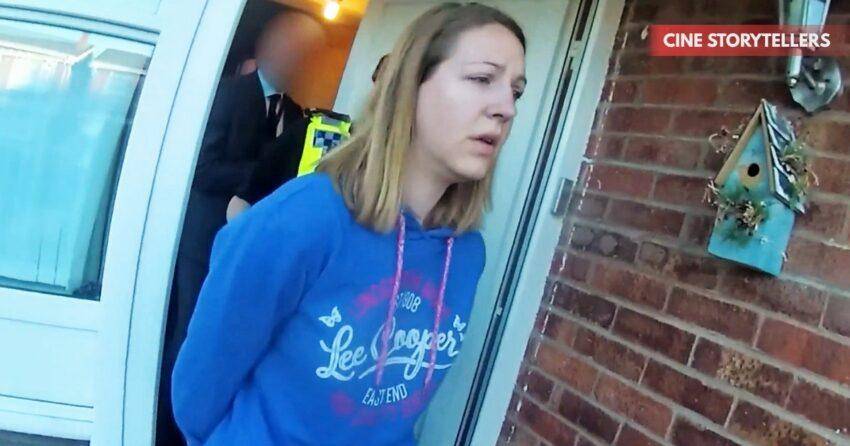
A new Netflix documentary examining the investigation into convicted neonatal nurse Lucy Letby has triggered renewed controversy after including previously unseen video footage of her arrest inside her parents’ home. While the film aims to provide deeper insight into one of the UK’s most disturbing criminal cases, Letby’s parents have publicly condemned the documentary, saying the release of such intimate footage represents a profound invasion of privacy. The backlash has reopened wider conversations about true-crime ethics, media responsibility, and the human cost of public storytelling in high-profile criminal cases.
Netflix’s Lucy Letby Documentary Explained


Netflix’s latest true-crime release focuses on the investigation, arrest, and prosecution of Lucy Letby, a former neonatal nurse convicted of murdering seven babies and attempting to murder seven others while working at the Countess of Chester Hospital.
The documentary goes beyond courtroom reporting, weaving together police interviews, medical testimony, and previously unseen footage to reconstruct how investigators built their case. For many viewers, it offers a clearer understanding of how suspicions developed and how evidence was gathered over several years.
However, one specific element has dominated headlines and public reaction: the inclusion of arrest footage filmed inside Letby’s parents’ home.
Also Read : Gabriel Basso Reveals Why He Deleted Instagram and How Fame Changed His Perspective
The Arrest Footage at the Center of the Controversy
The documentary includes body-worn police camera footage showing officers arresting Lucy Letby in her bedroom at her parents’ house. The video captures a deeply personal moment, showing Letby in a state of shock as officers explain why she is being taken into custody.
This is the first time such footage has been publicly released. While arrest videos have become increasingly common in true-crime storytelling, this particular case stands out due to the private setting and the emotional impact on Letby’s family, who were present during the arrest.
For viewers, the footage adds raw immediacy. For Letby’s parents, it has been described as devastating.
Why Lucy Letby’s Parents Are Speaking Out
Susan and John Letby, Lucy’s parents, have publicly condemned the documentary, stating they were not informed that footage filmed inside their home would be broadcast to a global audience.
They described the inclusion of the arrest scene as a “complete invasion of privacy,” emphasizing that their home was not just a crime scene but a personal family space where they have lived for decades.
According to statements attributed to the couple, they have chosen not to watch the documentary at all, saying that doing so would be emotionally unbearable. Their reaction has drawn sympathy even from those who believe the documentary serves a public interest.
The Emotional Cost for Families of the Accused
One of the least discussed aspects of true-crime storytelling is the impact on families connected to the accused. Regardless of public opinion on guilt or innocence, parents and relatives often find themselves unwillingly pulled into global scrutiny.
In this case, Letby’s parents were not charged with any crime, yet their private home and voices are now part of a widely streamed production. The fear, they say, is not only emotional distress but long-term consequences, including unwanted attention and the transformation of their home into a point of public curiosity.
Their experience highlights a recurring issue in high-profile cases: where does accountability end and exploitation begin?
What the Documentary Aims to Achieve
From Netflix’s perspective, the documentary is positioned as an in-depth examination of a complex criminal investigation. It includes interviews with detectives, medical professionals, and individuals involved in uncovering patterns that ultimately led to Letby’s conviction.
The film attempts to show:
- How suspicions were initially dismissed
- Why the investigation took years to progress
- The challenges of proving wrongdoing in a medical setting
- The emotional toll on victims’ families
In that sense, the documentary serves as both a case study in criminal investigation and a cautionary tale about institutional blind spots.
Also Read : The Muppet Show Returns in 2026: Guest Stars, What to Expect, and Why It Matters
The Broader Debate Around True-Crime Ethics
The backlash surrounding the Lucy Letby documentary is part of a larger conversation about ethics in true-crime media. As the genre has grown more popular, critics argue that the line between public interest and sensationalism has become increasingly blurred.
Key ethical questions raised by this case include:
- Should footage filmed in private homes require explicit consent before release?
- Do convicted individuals and their families retain any right to privacy?
- Is emotional impact being prioritized over responsible storytelling?
Supporters of such documentaries argue that transparency and access to real footage help audiences understand how justice systems operate. Critics counter that trauma should not be repackaged as entertainment.
Why This Case Continues to Resonate
Lucy Letby’s case shocked the UK not only because of the crimes themselves but because of where they occurred. Hospitals are spaces of trust, and neonatal units represent the most vulnerable patients imaginable.
The case has prompted widespread reflection on:
- Medical oversight and accountability
- Whistleblowing within healthcare institutions
- How patterns of harm can go unnoticed
The documentary taps into that unresolved discomfort, reminding viewers that the consequences of institutional failure can be catastrophic.
Public Reaction to the Netflix Release
Reaction to the documentary has been deeply divided. Some viewers praise the film for its clarity and thoroughness, saying it sheds light on how difficult it was to identify wrongdoing in a clinical environment.
Others, however, echo the concerns raised by Letby’s parents, arguing that the arrest footage crosses a moral line. On social media, debates have focused less on Letby herself and more on whether true-crime media has gone too far.
This split reaction reflects the growing tension between audience demand for realism and the ethical responsibility of content creators.
Legal Context and Ongoing Questions
Lucy Letby is currently serving multiple whole-life sentences following her conviction. While the documentary does not change her legal status, it arrives at a time when aspects of the case continue to be discussed in legal and medical circles.
Some experts have raised questions about systemic failures within the hospital, while others maintain that the evidence presented at trial was overwhelming. The documentary touches on these complexities without offering definitive conclusions, leaving viewers to grapple with uncomfortable ambiguities.
Why This Story Matters Beyond One Documentary
At its core, the controversy surrounding Netflix’s Lucy Letby documentary is about more than one case or one family. It reflects broader concerns about how modern media handles trauma, crime, and accountability.
As streaming platforms continue to invest heavily in true-crime content, cases like this may influence future decisions about consent, privacy, and ethical boundaries.
For audiences, it serves as a reminder that behind every headline and documentary episode are real people whose lives are permanently altered by public exposure.
Also Read : Craig Ferguson Named New Host of Scrabble on The CW – What Viewers Can Expect
FAQs
What is the Netflix Lucy Letby documentary about?
The documentary examines the investigation, arrest, and conviction of Lucy Letby, including previously unseen footage and interviews with those involved in the case.
Why are Lucy Letby’s parents upset about the documentary?
They say the inclusion of arrest footage filmed inside their home is a serious invasion of privacy and that they were not informed it would be released.
Does the documentary include new evidence?
It includes previously unseen footage and interviews but does not introduce new evidence that affects Letby’s conviction.
Is Lucy Letby still in prison?
Yes. She is serving multiple whole-life sentences following her conviction for murder and attempted murder.
Has Netflix responded to the criticism?
As of now, Netflix has not issued a detailed public response addressing the specific concerns raised by Letby’s parents.
Join our WhatsApp channel for more updates and information about celebrities and entertainment.


I’m Atul Kumar, founder of Cine Storytellers and an entertainment creator with 5+ years of experience. I cover films, celebrities, music, and OTT content with a focus on accurate, ethical, and engaging storytelling. My goal is to bring readers trustworthy entertainment news that informs, inspires, and goes beyond gossip.