
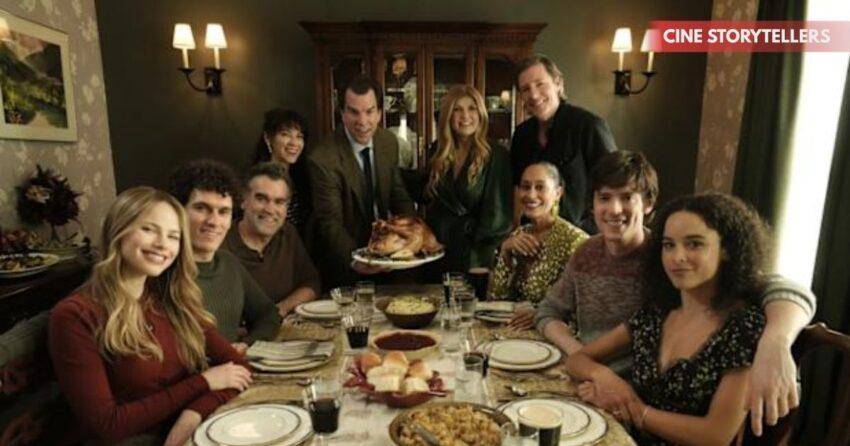
In revisiting the beloved world of The Brothers McMullen, Ed Burns chooses not to glamourize family or nostalgia — instead he draws inspiration from a classic film about messy, loving families to craft The Family McMullen. By shooting in his childhood home, framing the story around Thanksgiving, and leaning into familiar imperfections, Burns revisits old characters with warmth, honesty and a surprisingly hopeful look at what “home” really means.
Why Ed Burns Went Back to the McMullens – After 30 Years


When Ed Burns made his breakthrough with The Brothers McMullen in 1995 — a gritty, heartfelt story about three Irish-American brothers trying to figure out love, loyalty and adulthood on Long Island — few could have predicted that, three decades later, Burns would return to that world. Yet with The Family McMullen, streaming now on HBO Max, he does exactly that.
After years of turning away from his early characters, Burns says the spark to revisit them came not from nostalgia alone, but from observing the changing reality of young adults — many moving back home, grappling with shifting values, unstable housing, and uncertain futures. That real-world shift became a bridge to bring the McMullens back to life. Suddenly, their story of family, loss, hope and imperfection felt relevant again.
He didn’t want a sequel just for the sake of revisiting old characters. He wanted a reason — a social pulse, a sense of urgency, a contemporary mirror. And Broader societal shifts, especially post-pandemic, provided just that.
A Homage to Moonstruck — Borrowing Tone, Family, Imperfection
For Burns, the creative north star during scripting was not another McMullen film — but Moonstruck. That 1980s classic about chaotic but loving New-York-Italian family dynamics, full of humor, heartbreak, and human messiness, resonated with him deeply.
What intrigued him was how Moonstruck portrayed a family that’s flawed, loud, bitter at times, loving at others — yet grounded in authenticity. Not perfect, but real. Not glamorous, but alive. And crucially, ending around a kitchen table, not in some grand finale.
That approach informed much of The Family McMullen — from the decision to anchor the story around Thanksgiving, to the everyday small gestures (shared meals, sentimental fights, awkward reunions). The film isn’t about resolution or fairy-tale endings. It’s about survival, love, and the messy art of making family work, again and again.
Revisiting Childhood — Literally Shooting in His Old Home
One of the most evocative choices Burns made for the new McMullen film was to shoot many scenes in the very house he grew up in. Though the house has long since changed hands, some rooms — like the kitchen — remained untouched. Walking into that space decades later, walking through the same doors and hallways, gave the cast and crew something no set decorator could replicate: authenticity.
For Burns, that house isn’t a set piece — it’s memory. It’s adolescence, late-night fights with siblings, the smell of dinner, the feeling of home. That kind of realism seeps into the performances, the dialogue, the mood. It transforms the movie from a sequel into a living memory, shared by audience and creator alike.
That grounding in real location also helps the actors inhabit their characters fully — not as cinematic archetypes, but flawed, breathing humans with pasts, regrets, longings.
What’s Changed — And What Remains
Real adult problems, real adult stakes
It’s been 30 years. The original McMullens are no longer wide-eyed twenty-somethings fumbling with love and faith. They’re older now: dealing with divorce, loss, kids, regret, and hard-won wisdom.
The new film doesn’t shy away from that — it treats maturity not as a punchline, but as a responsibility. The romantic misadventures and coming-of-age angst are replaced with quiet crises: family fractures, forgotten dreams, the heaviness of survival, and the chance — maybe — for something like reconciliation.
Love, loyalty — but with scars
The new McMullen cast is richer (in both age and emotional baggage), and so are their relationships. Old friendships, estranged siblings, former lovers — all return. They don’t always heal; sometimes they just survive together, in imperfect peace.
The romance, the drama — those are still present. But now layered with the weight of decades: grief, regret, generational change, responsibilities.
Hope in spite of everything
What’s heartening is not that everything ends well — but that everything still matters. Even if relationships don’t heal fully, even if choices haunt them, these characters — like many real families — keep showing up. They keep trying.
That’s the real power of the film: acknowledging that life doesn’t offer clean endings, but sometimes it offers a chance. A chance to try again. A chance to belong.
Why This Film Matters Right Now
In a world where youth, success and “making it” are often glorified, The Family McMullen offers a different — quieter, more human — vision. It says: it’s okay to not have everything sorted. It’s okay to come back home. It’s okay to be messy.
It also captures a moment in time. With economic uncertainty, shifting lifestyles, breaking norms, many people — especially younger generations — are rethinking what stability, home, and family mean. This film mirrors that restlessness.
Also, it reminds us that cinematic nostalgia need not be sterile or polished. It can be warm, flawed, familiar. That homesick ache, those memories, that imperfect recreation — sometimes that’s the most comforting story you can tell.
What Works (And What Might Not Work For Everyone)
What works:
- The performances feel lived-in — familiar and deeply human, not stylized or performative.
- The setting — real house, real memories — adds authenticity that shows.
- The mixture of humor, heartbreak and hope is subtle and resonant, not overwrought.
- The themes — family, failures, second chances — are universal and timely.
What might not work:
- If you expect glossy rom-coms or tidy resolutions, this film may feel too grounded, too raw.
- Some character arcs remain unfinished — not all wounds heal, and not all stories get closure.
- The slow, reflective pace might feel meandering to those preferring fast-paced drama.
Also Read : Zoe Kravitz and Harry Styles Spotted Together in Rome
Why Burns Isn’t Doing This for Fame — But for Love of Story
In revisiting the McMullens, Burns isn’t chasing nostalgia or easy money. He’s returning because the story feels alive. Because the world changed — and old characters deserve new truths. Because real houses, real memories, real flaws matter.
He’s not trying to remake the past — he’s trying to honor it, question it, reconcile with it. And in doing that, he offers us not a polished escape, but a mirror: messy, human, hopeful, broken — but real.
For viewers tired of shiny facades, scripted perfection, and happy-ending clichés, The Family McMullen is a breath of honesty. It tells us: family isn’t about perfection. It’s about trying. Over and over.
Also Read : Robert Downey Jr. Playfully Roasts Gwyneth Paltrow at Gala – MCU Fans React
Frequently Asked Questions (FAQ)
Q: Why did Ed Burns cite Moonstruck as an inspiration for The Family McMullen?
Because Moonstruck captured the messy, chaotic, loving reality of a family — not idealised, but deeply human. Burns wanted to channel that realism and emotional honesty into his own sequel, with flawed characters, real homes, and imperfect dynamics.
Q: Did they film in a real house connected to Burns?
Yes — many scenes were shot in the house where Burns grew up. Some rooms hadn’t changed in decades, lending genuine atmosphere and nostalgia to the film’s setting.
Q: Is The Family McMullen just a nostalgic throwback?
Not at all. While it revisits old characters, it treats them as older, more complex adults. It’s not about recreating the past — it’s about examining how people evolve, adapt, and sometimes come back together under entirely new circumstances.
Q: Will this film appeal to people unfamiliar with the original?
Yes. The themes — family, loss, forgiveness, hope — are universal, and the characters’ struggles feel timeless. You don’t need prior knowledge to connect emotionally with the story.
Q: What kind of tone does this film strike — lighthearted, dramatic, or somewhere in between?
It’s a delicate balance. There’s warmth, humor, and familiar banter — but also regret, heartbreak, and wistful reflection. It leans toward quiet drama steeped in realism and subtle emotional weight.
Join our WhatsApp channel for more updates and information about celebrities and entertainment.


I’m Atul Kumar, founder of Cine Storytellers and an entertainment creator with 5+ years of experience. I cover films, celebrities, music, and OTT content with a focus on accurate, ethical, and engaging storytelling. My goal is to bring readers trustworthy entertainment news that informs, inspires, and goes beyond gossip.