
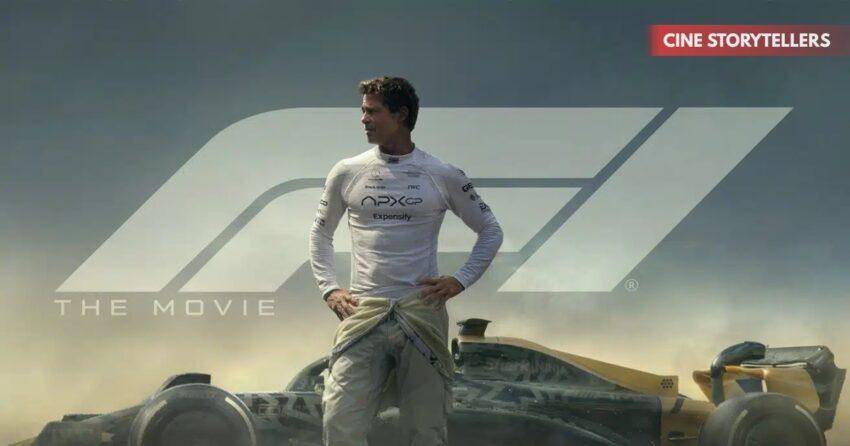
When Oscar nominations dropped, few expected a Formula One racing film to be part of the conversation — yet F1: The Movie didn’t just show up, it made a statement. With four Academy Award nominations, including the highly coveted Best Picture slot, the high-octane drama has officially crossed from blockbuster entertainment into prestige territory. From jaw-dropping race sequences to technical mastery behind the scenes, this article breaks down how F1 pulled off one of awards season’s most surprising runs – and why it might change how sports films are viewed at the Oscars going forward.
F1: The Movie Just Changed the Oscar Conversation

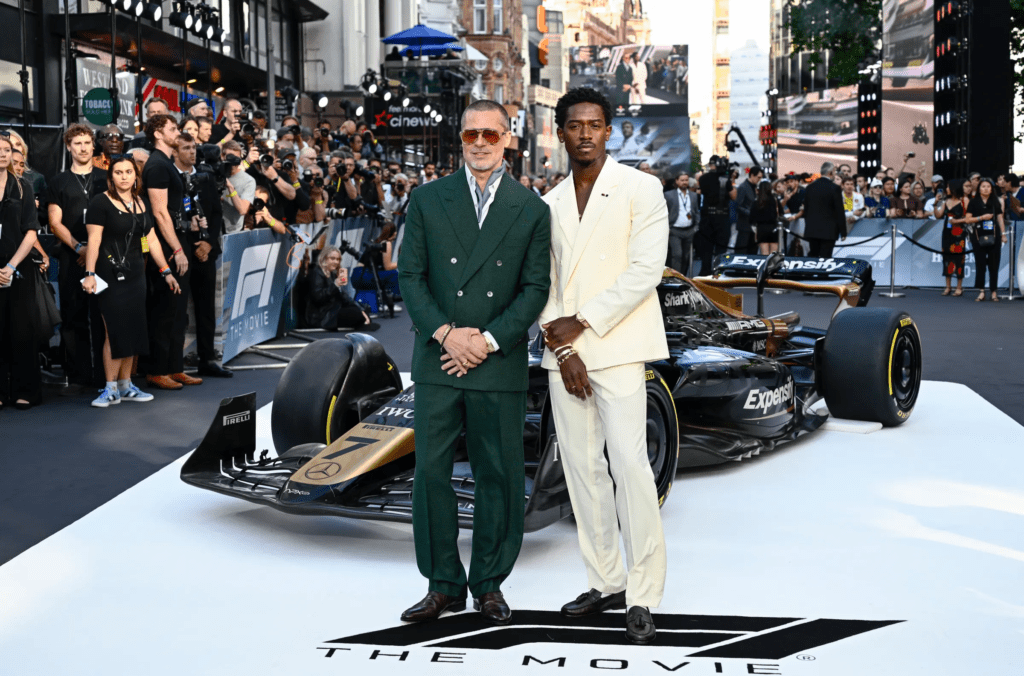
Sports films don’t usually dominate Oscar headlines — especially not films built around speed, spectacle, and global franchises like Formula One. That’s why F1: The Movie earning four Oscar nominations instantly became one of the most talked-about moments of awards season.
This isn’t just about trophies. It’s about perception. The Academy has historically favored intimate dramas, literary adaptations, and emotionally heavy character studies. F1 entering the Best Picture race signals a broader shift — one where large-scale, technically ambitious films can stand shoulder to shoulder with traditional prestige cinema.
What F1: The Movie Is Really About
At its core, F1: The Movie is less about racing laps and more about legacy, redemption, and pressure.
Brad Pitt stars as Sonny Hayes, a once-elite Formula One driver whose career faded before he reached his full potential. When a struggling team needs leadership, Hayes is pulled back into the sport — not just to race, but to mentor a younger, fiercely talented driver played by Damson Idris.
What unfolds is a story about experience versus ambition, risk versus control, and how success in Formula One — and life — often comes at a personal cost. The emotional grounding is what separates F1 from earlier racing films that focused purely on adrenaline.
Also Read : Salaar 2 Teaser Expected in January 2026: Prabhas & Prashanth Neel Film Updates
The Four Oscar Nominations Explained
Best Picture
This is the nomination that surprised nearly everyone.
A racing film landing in the Best Picture category is rare — and that’s exactly why it matters. The Academy clearly viewed F1 as more than entertainment. It’s a recognition of storytelling ambition, emotional resonance, and cinematic scale working together.
Being included among the year’s ten best films places F1 in elite company and elevates it from blockbuster status into awards-season history.
Film Editing
Formula One is chaos at 200 miles per hour. Editing that chaos into something coherent — while still thrilling — is no small feat.
The film’s editing keeps race sequences razor-sharp without sacrificing clarity. Viewers always know where they are, who’s ahead, and what’s at stake. At the same time, the film smoothly transitions between action and quieter character moments, maintaining momentum without exhausting the audience.
This nomination acknowledges precision, pacing, and storytelling discipline.
Sound
If there’s one element that had to work in a Formula One movie, it was sound — and F1 absolutely delivers.
From roaring engines to tire friction, wind resistance, and cockpit isolation, the sound design puts viewers inside the driver’s seat. It’s immersive without being overwhelming, technical without being distracting.
This nomination confirms what audiences already felt in theaters: F1 doesn’t just show racing — it sounds like racing.
Visual Effects
While much of the racing footage was captured in real-world environments, visual effects played a critical role in enhancing realism.
From digitally integrating fictional teams into live race footage to enhancing speed, danger, and scale, the visual effects are seamless. Nothing feels artificial or overproduced — a balance that’s notoriously difficult to achieve in sports films.
The Academy’s recognition here reflects restraint as much as spectacle.
Why This Best Picture Nomination Matters So Much
Let’s be honest — F1 isn’t the kind of movie Oscar voters typically reward with Best Picture recognition.
And that’s exactly why this nomination matters.
It suggests the Academy is becoming more open to films that combine commercial appeal with technical excellence. F1 proves that emotional storytelling doesn’t need to come from quiet rooms and whispered dialogue — it can exist at 220 miles per hour.
This nomination may open doors for future genre films that previously wouldn’t have been taken seriously during awards season.
Real Racing, Real Stakes, Real Authenticity
One of F1’s biggest strengths is its commitment to authenticity.
Instead of recreating races on closed sets, the filmmakers embedded themselves within actual Formula One weekends. The result is footage that feels alive — unpredictable, intense, and genuinely dangerous.
That realism translates directly to the screen. You can feel the pressure, the risk, and the stakes in every scene. It’s a level of immersion that CGI-heavy sports films often struggle to replicate.
Also Read : 2026 Oscar Nominations Full List: Biggest Winners, Snubs & Records
Brad Pitt’s Performance: Quiet, Controlled, Effective
While Brad Pitt didn’t receive an acting nomination, his performance anchors the entire film.
Rather than delivering grand monologues, Pitt plays Sonny Hayes with restraint. His portrayal is built on subtle expressions, physical exhaustion, and emotional distance — fitting for a driver who’s spent years outrunning his own past.
The performance doesn’t demand attention, but it earns it — a quality that often resonates with Academy voters even without a nomination.
How F1 Performed at the Box Office
Awards recognition aside, F1: The Movie has also been a commercial success.
The film performed strongly worldwide, proving that audiences were eager for a racing film that treated the sport seriously. That box-office momentum helped keep the movie in the awards conversation long after its theatrical release.
In today’s landscape, where commercial success and awards prestige rarely overlap, F1 managed to achieve both.
What F1’s Success Says About the Oscars
The Academy has been evolving — slowly, but noticeably.
In recent years, voters have shown greater openness to genre films, technical achievements, and mainstream storytelling. F1’s nominations reflect that evolution. They suggest a future where the Oscars recognize not just what a film says, but how powerfully it’s made.
This shift could redefine awards season in the years ahead.
Can F1: The Movie Actually Win?
Let’s be realistic.
While Best Picture is a long shot, F1 has a genuine chance in the technical categories, particularly Sound and Film Editing. These are areas where the film clearly stands out against the competition.
Even if it doesn’t take home a statue, the nominations alone have already secured the film’s place in Oscar history.
What Happens Next for the Film
Regardless of awards night outcomes, F1: The Movie has already won something arguably more valuable — legacy.
It’s now part of the conversation about what Oscar-worthy cinema looks like. It has redefined expectations for sports films and proved that technical mastery and emotional storytelling can coexist.
That influence will last far beyond this awards season.
Also Read : Who is Cruz Beckham’s Girlfriend Jackie Apostel? Everything You Need to Know
FAQs
How many Oscar nominations did F1: The Movie receive?
The film earned four Oscar nominations, including Best Picture, Film Editing, Sound, and Visual Effects.
Is F1: The Movie nominated for Best Picture?
Yes. It is officially one of the Best Picture nominees at the 98th Academy Awards.
Who stars in F1: The Movie?
Brad Pitt leads the film alongside Damson Idris, with supporting performances that add emotional depth to the racing drama.
What makes F1 different from other racing films?
Its use of real Formula One environments, grounded performances, and restrained storytelling sets it apart from more stylized racing movies.
When are the 2026 Oscars?
The Academy Awards ceremony will take place in March 2026.
Join our WhatsApp channel for more updates and information about celebrities and entertainment.


I’m Atul Kumar, founder of Cine Storytellers and an entertainment creator with 5+ years of experience. I cover films, celebrities, music, and OTT content with a focus on accurate, ethical, and engaging storytelling. My goal is to bring readers trustworthy entertainment news that informs, inspires, and goes beyond gossip.