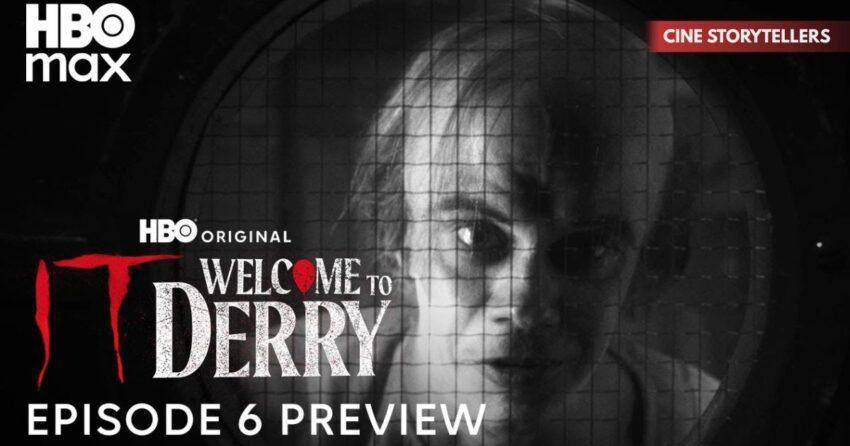
In its sixth episode, IT: Welcome to Derry delivers one of its most dramatic turns yet: a major character’s identity is exposed, dark pasts come crashing into the present, and a violent mob closes in on a safe haven. With personalities fractured and threats mounting, the series shifts into high gear — blending supernatural terror with real-world social horrors. This recap captures the events, emotional weight, and what it all might mean as we head into the final stretch.
Episode 6 Changed Everything
A Haunting Flashback Opens the Door
The episode begins with a chilling 1935 flashback at the old asylum, offering a glimpse into a trauma long buried. A young inmate is lured by a caretaker — a woman bearing uncanny resemblance to a present-day character. That scene — dark, unsettling, and drenched in dread — immediately establishes that Derry’s horrors are old, buried deep, but far from gone.
This opening sets the tone: history in Derry doesn’t stay buried. It resurfaces, dragging its ghosts with it.
The Big Reveal: Ingrid’s Secret Ties to Pennywise
The biggest bombshell of Episode 6: Ingrid Kersh — long presumed a concerned adult, perhaps safe or harmless — is revealed to be the daughter of Pennywise (in human form, Bob Gray).
- Ingrid believed that Pennywise was her father and apparently spent decades trying to reconnect with him.
- Under a twisted guise — her clown-persona “Periwinkle” — she’s been aiding his evil by luring children and furthering his agenda.
- A shocking reveal at her house: old photographs, memories, and evidence that betray her innocence and rewrite her entire character arc.
That twist upends everything: someone trusted, someone in authority, has been feeding the monster all along — not out of fear, but out of grief and obsession.
The Black Spot: A Safe Haven Under Threat
In this episode, the fight isn’t only against a monster: it’s against racism, paranoia, and mob violence.
- The The Black Spot — the town’s historically Black gathering place — becomes a refuge for key characters, sheltering those targeted by hate and fear.
- But as misinformation spreads, a mob — fueled by prejudice and incited by an anonymous tip — converges on the club in search of a scapegoat: Hank Grogan.
The threat is both real and terrifying. It’s no longer just about fighting Pennywise — it’s about protecting each other from humanity’s worst impulses.
Fear, Guilt, Division — Inside the Characters’ Minds
On top of external horror, the show continues to explore internal conflict:
- Families and friendships fracture under suspicion. Trust erodes.
- Kids once bonded by shared trauma begin to question each other’s motives.
- Anger, grief, fear — all spiral, making it harder to know who’s victim, who’s villain, who’s still sane.
In Derry, even loved ones become suspects — and desperation leads to devastating choices.
What Works — And What Feels Risky
The Strength: Horror with Heart and Real Pain
- The blend of societal brutality and supernatural terror gives the show a weight many horror tales lack. It’s not just about monsters under the bed — it’s about real-world monstrosities mirrored in the town’s own people.
- The character work stands out. When Ingrid’s secret is revealed, the betrayal hits emotionally — because it’s not just about fear. It’s about a woman twisted by pain and longing.
- The show takes risks. It doesn’t shy away from violence, from moral complexity, from making the safe spaces unsafe again.
The Risk: Shock vs. Subtlety
- The “clown-daughter” twist — while dark and dramatic — feels abrupt. Some viewers may find it heavy-handed or too loaded for what had previously felt like a creeping horror story.
- Balancing social horror (racism, mob violence, prejudice) with supernatural horror (clowns, monsters, dark rituals) is tricky. Too much of one can overshadow the other.
- With the Black Spot siege and multiple plotlines converging, there’s a risk of chaos — motivations getting jumbled, characters sidelined, tension saturating the screen until it loses impact.
What It All Means Going Forward
As Episode 6 ends, Derry looks more fragile than ever — but the stakes are clearer, and the danger more immediate.
The Countdown to Disaster or Reckoning
With the mob heading toward Black Spot, and Pennywise’s human-ally exposed, the next episodes can go many ways:
- A violent showdown — possibly tragic, possibly heroic.
- A final push to unite the town’s fractured souls — children, Black residents, former allies — against the evil that has always lived among them.
- A descent into deeper madness, as grief and fear cloud judgment, and people turn on each other.
The tension is high. And the payoff could be brutal — in the best storytelling way.
Themes That Hit Hard: Fear, Betrayal, and the Cost of Hope
At its core, the show isn’t just about a monster. It’s about how trauma — personal or collective — warps us. How losing someone can break us… or bend us.
Ingrid’s betrayal, the mob’s rage, the kids’ paranoia — all reflect darker truths about grief, prejudice, trust, and survival.
This season isn’t just a horror story. It’s a cautionary tale about what happens when fear wins.
Who This Episode Was For – And Possibly Too Much For Others
If you like horror that grips both heart and gut — supernatural dread mixed with social realism — Episode 6 delivers in spades. It forces viewers to question: sometimes, the real monsters are people.
But if you prefer subtle horror, slow burns, steady scares — the heavy twist, the racial tension, the mob violence — might feel overwhelming. It’s no longer just about fear of the unknown. It’s about fear of the known.
Also Read : Sitcom Star Arrested for Sixth Time in Five Years: Full Breakdown
FAQ
Q: What’s the big twist in Episode 6?
A: Ingrid Kersh is revealed to be the daughter of Pennywise (Bob Gray). She’s been secretly aiding him, believing he’s her father, and manipulating children to bring him power.
Q: Why is The Black Spot important this episode?
A: It’s a safe space for marginalized characters — but because of a tip (likely from Ingrid), a racist mob descends on it, threatening everyone inside.
Q: Does the show balance horror and social themes well?
A: Many would say yes — the season uses horror to highlight racism, grief, fear, betrayal. It doesn’t glamorize violence, but shows its consequences.
Q: Is this a good jumping-on point for new viewers?
A: Episode 6 is intense. If you’re new, you’ll miss earlier build-ups — it’s better to start from the beginning to understand relationships and stakes.
Q: What should viewers expect next?
A: High tension, possible major conflict at The Black Spot, deeper emotional breakdowns, and the likelihood the horror becomes even more personal and brutal.
Join our WhatsApp channel for more updates and information about celebrities and entertainment.

I’m Atul Kumar, founder of Cine Storytellers and an entertainment creator with 5+ years of experience. I cover films, celebrities, music, and OTT content with a focus on accurate, ethical, and engaging storytelling. My goal is to bring readers trustworthy entertainment news that informs, inspires, and goes beyond gossip.
Discover more from Cine Storytellers
Subscribe to get the latest posts sent to your email.