
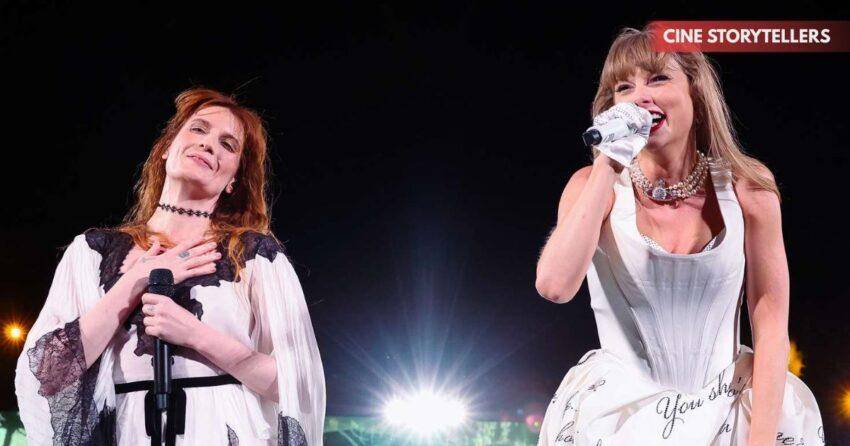
Florence Welch has spent nearly two decades commanding stages around the world, yet one of the most intimidating moments of her career came when she joined Taylor Swift on the Eras Tour. In a recent candid reflection, the Florence + the Machine frontwoman described the experience as “terrifying,” not because of doubt in her talent, but because of the sheer scale, precision, and cultural weight of Swift’s global phenomenon. From unexpected choreography to the surreal feeling of stepping into a meticulously controlled pop universe, Welch’s honesty offers a rare look at what it’s really like to be a guest inside one of the biggest tours in music history.
Florence Welch Is No Stranger to Big Stages — So Why the Fear?
Florence Welch is the kind of performer who feels larger than life. Her voice soars, her movements are unrestrained, and her shows often feel closer to spiritual experiences than standard concerts. She has headlined festivals, sold out arenas, and built a reputation as one of the most emotionally powerful live performers of her generation.
That’s why her admission that performing on Taylor Swift’s Eras Tour felt “terrifying” caught many fans off guard.
This wasn’t stage fright in the traditional sense. Welch wasn’t worried about singing or connecting with the audience. Instead, she was stepping into an environment unlike anything she had experienced before — a production so massive, choreographed, and culturally loaded that it demanded a completely different kind of performance discipline.

Entering the World of the Eras Tour
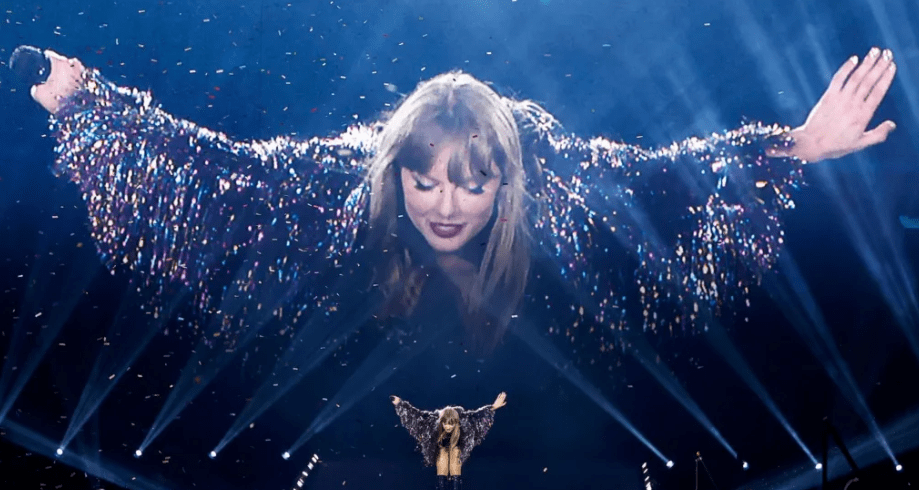
The Eras Tour isn’t just a concert series. It’s a carefully engineered spectacle designed to move seamlessly through Taylor Swift’s entire career, era by era, night after night. Every cue matters. Every movement is timed. Every entrance and exit is calculated.
For Florence Welch, whose stage presence thrives on instinct and emotional release, this structure was both impressive and intimidating.
She described feeling like she was stepping into someone else’s universe — one that she admired deeply but didn’t naturally inhabit. The pressure didn’t come from Swift herself, but from the weight of the moment: millions of fans watching, a global cultural event unfolding in real time, and the knowledge that every second onstage would be scrutinized.
The Choreography Curveball
One of the biggest surprises for Welch was learning that her appearance required choreography.
At her own shows, she moves freely, often improvising as the music carries her. On the Eras Tour, however, there was no room for spontaneity. Every step mattered. Every position had to be hit precisely.
Welch admitted she initially panicked at the idea. It wasn’t arrogance — it was self-awareness. She knows her strengths, and choreographed pop performance isn’t where she typically lives.
The fear wasn’t about failing publicly. It was about disrupting a finely tuned machine. When you’re a guest on a production of that scale, your margin for error feels razor-thin.
Also Read : Peter Greene Dead at 60: Pulp Fiction and The Mask Actor Found in NYC Apartment
“Landing on Another Planet”
Welch’s description of arriving onstage is one of the most striking parts of her reflection.
She compared rising onto the stage to landing on another planet — a place she had seen from afar but never fully entered. From the outside, she understood the Eras Tour as a fan and peer. From the inside, it felt overwhelming.
Suddenly, Taylor Swift wasn’t just her friend or collaborator. She was the center of a global movement, commanding a stadium with effortless authority. Seeing that transformation up close made Welch acutely aware of the magnitude of what she was stepping into.
It’s a moment many artists can relate to but rarely articulate: realizing that fame exists in layers, and some layers are so massive they can shake even seasoned performers.
The Pressure of Respect, Not Competition
What makes Welch’s honesty especially compelling is that her fear didn’t come from rivalry or insecurity.
It came from respect.
She has long admired Taylor Swift’s work ethic, storytelling, and connection with fans. Performing alongside someone you respect at that level carries its own pressure. You don’t want to let them down. You don’t want to distract from their vision.
Welch wasn’t trying to steal the spotlight or prove herself. She was trying to honor the moment — and that responsibility felt heavy.
How the Performance Actually Unfolded
Despite her nerves, the performance itself was a success.
Once the music started and Welch found her footing within the structure of the show, instinct took over. Her voice cut through the stadium, and her presence added a raw, emotional edge to the performance that contrasted beautifully with the tour’s polished production.
That contrast is part of what made the moment special. Welch didn’t disappear into the machinery of the Eras Tour — she brought her own energy into it, even while following its rules.
By the time the performance ended, the fear had transformed into exhilaration. The terror hadn’t vanished, but it had become part of the experience rather than an obstacle.
A Rare Glimpse Behind the Curtain of Superstardom
One of the reasons Welch’s comments resonate so strongly is because they strip away the illusion that successful artists are immune to fear.
From the outside, it’s easy to assume that once you reach a certain level, nothing intimidates you anymore. Welch’s honesty proves the opposite. Growth often comes from stepping into spaces that make you uncomfortable, even when you’re already accomplished.
Her story also highlights how different performance cultures can be within the same industry. Rock-leaning artists often prioritize emotional freedom, while pop mega-tours rely on precision and repetition. Navigating that shift is no small feat.
What This Moment Says About Taylor Swift’s Cultural Power
Welch’s reaction unintentionally underscores something bigger about Taylor Swift’s place in modern music.
The Eras Tour isn’t just successful — it’s a cultural institution. Being part of it means stepping into a moment that extends beyond music into identity, nostalgia, and collective experience.
For a fellow artist to feel intimidated by that scale speaks volumes about Swift’s reach. It’s not about ego or dominance; it’s about the gravitational pull of a phenomenon that few performers in history have achieved.
Fans Embraced Welch’s Vulnerability
Rather than diminishing her stature, Welch’s honesty endeared her even more to fans.
Many listeners saw themselves in her fear — the feeling of walking into a room where expectations feel impossibly high, even when you’re qualified to be there. Her willingness to admit discomfort made the moment human, relatable, and inspiring.
It also sparked conversations about how success doesn’t erase anxiety — it simply changes its shape.
A Moment That Fits Florence Welch’s Artistic Identity
Interestingly, Welch’s experience aligns closely with the themes she often explores in her own music: vulnerability, transcendence, fear, and emotional surrender.
Her art has always been about confronting overwhelming feelings rather than avoiding them. In that sense, her Eras Tour appearance wasn’t a departure from her identity — it was an extension of it, just in a different setting.
Fear didn’t disqualify her from the moment. It became part of the story.
The Value of Stepping Outside Your Comfort Zone
If there’s a takeaway from Welch’s reflection, it’s this: even the most accomplished artists benefit from moments that challenge them.
The Eras Tour forced her to adapt, trust, and surrender control — qualities that don’t always come naturally to performers who thrive on spontaneity. That discomfort didn’t weaken her artistry; it expanded it.
Moments like these remind us that growth often happens when confidence and fear coexist.
Why This Story Matters Beyond Celebrity News
At its core, this isn’t just a celebrity anecdote.
It’s a story about humility, respect, and the courage to say yes to something that scares you — even when you’re already successful. Welch’s experience reframes fear not as failure, but as evidence that a moment matters.
That’s why her words linger. They cut through the noise of tour statistics and headlines to reveal something real.
Also Read : Taylor Swift Turns 36: A Look Back at Her Most Iconic Birthday Celebrations
FAQs
Why did Florence Welch call her Eras Tour appearance “terrifying”?
She felt overwhelmed by the scale, choreography, and cultural weight of Taylor Swift’s tour, which was very different from her usual performance style.
Was Florence Welch nervous about singing?
No. Her fear wasn’t about vocal ability but about fitting into a tightly choreographed, high-pressure production.
Did she enjoy the experience in the end?
Yes. Once the performance began, the fear turned into exhilaration and pride.
What song did Florence Welch perform with Taylor Swift?
She joined Swift for a duet during the tour’s London shows, creating one of the most talked-about guest moments.
How did fans react to her comments?
Fans praised her honesty and vulnerability, finding her reflections relatable and inspiring.
Join our WhatsApp channel for more updates and information about celebrities and entertainment.


I’m Atul Kumar, founder of Cine Storytellers and an entertainment creator with 5+ years of experience. I cover films, celebrities, music, and OTT content with a focus on accurate, ethical, and engaging storytelling. My goal is to bring readers trustworthy entertainment news that informs, inspires, and goes beyond gossip.