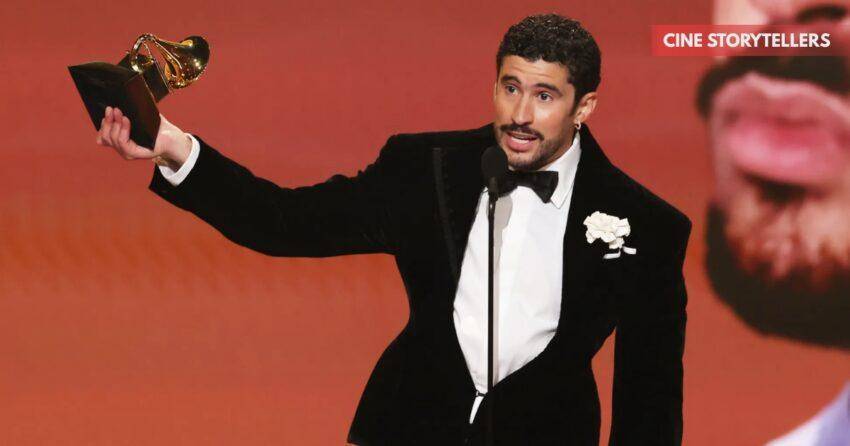
Bad Bunny’s Album of the Year win at the 2026 Grammy Awards wasn’t just another trophy moment — it was a cultural milestone. With his album Debí Tirar Más Fotos, the global superstar became the first artist to win the Grammys’ top honor with a Spanish-language project. His emotional acceptance speech, delivered largely in Spanish, sent a powerful message about representation, identity, and how global music has permanently reshaped the industry. This moment wasn’t about breaking records — it was about breaking barriers.
The Moment That Stopped the Grammy Awards Cold
When Bad Bunny’s name was announced for Album of the Year, the room shifted.
There was a split second of silence — not disbelief, but realization. This wasn’t just a win. This was history happening in real time.
As he walked to the stage, visibly emotional, it was clear this moment meant more than industry validation.
The Grammys have crowned countless legends over the decades, but this win felt different. It wasn’t just about excellence — it was about evolution.
Why This Album of the Year Win Is Truly Historic
For the first time in Grammy history, the most prestigious award went to a Spanish-language album.
That alone is monumental.
For decades, non-English albums have been categorized, celebrated, and praised — but rarely elevated to the top tier of recognition. Bad Bunny’s victory shattered that invisible ceiling.
This wasn’t a “global category” win or a genre-specific nod. This was the biggest award of the night, period.
And it sent a clear message: great music doesn’t need translation.
Also Read : Fela Kuti First African to Receive Grammy Lifetime Achievement Award
What Debí Tirar Más Fotos Represents
Bad Bunny’s album wasn’t built to chase awards — and that’s exactly why it resonated so deeply.
Debí Tirar Más Fotos is introspective, personal, and rooted in identity. The album blends reggaeton, Latin pop, and experimental sounds with deeply emotional storytelling. It reflects growth, vulnerability, and reflection — themes that cut across language barriers.
Rather than adapting his sound to fit a mainstream mold, Bad Bunny leaned further into who he is. That authenticity is what made the album impossible to ignore.
In many ways, the album feels like a conversation — with himself, with his past, and with the millions of listeners who see themselves in his story.
The Acceptance Speech That Made the Moment Even Bigger
When Bad Bunny began his acceptance speech in Spanish, it wasn’t performative. It was instinctive.
He spoke about his roots. He spoke about pride and spoke about people who leave their homes chasing dreams they aren’t always sure they’re allowed to have.
There was no attempt to simplify or soften the message. He trusted the moment — and the audience — to understand its weight.
That decision alone made the speech unforgettable.
It wasn’t about politics. It wasn’t about controversy and was about visibility.
Why This Win Feels Like a Turning Point for the Grammys
The Grammys have long been criticized for being slow to reflect the true diversity of modern music. This win doesn’t erase that history — but it signals progress.
Bad Bunny’s victory suggests that the Recording Academy is beginning to recognize global influence not as a niche, but as the mainstream itself.
Latin music isn’t a trend. It’s a pillar of modern pop culture.
This award acknowledged that reality in a way the Grammys never have before.
How Fans and Artists Reacted to the Win
Almost instantly, the internet erupted.
Fans celebrated the win as a victory for representation, for Latin music, and for artists who refuse to compromise their identity to succeed. Many called it one of the most emotional Grammy moments in years.
Fellow artists praised Bad Bunny for staying authentic and pushing boundaries without apology. Even those who didn’t expect the win acknowledged its significance.
Of course, there were debates — there always are — but even criticism couldn’t overshadow the magnitude of the moment.
History doesn’t ask for consensus.
Bad Bunny’s Career Has Always Been Building Toward This
This win didn’t come out of nowhere.
Bad Bunny has spent years reshaping what success looks like in the music industry. He’s topped charts, sold out global tours, crossed genres, and remained fiercely independent in his creative choices.
He never pivoted to English to gain approval. He never diluted his sound for mass appeal. Instead, the world adjusted to him.
Album of the Year wasn’t a surprise — it was a culmination.
What This Means for Spanish-Language Music Going Forward
Bad Bunny’s win opens doors — not symbolically, but practically.
It sets a precedent. It tells labels, voters, and gatekeepers that Spanish-language projects can compete at the highest level without translation or compromise.
More importantly, it tells young artists that their language is not a limitation.
This moment will be referenced for years whenever conversations about inclusion and recognition resurface — because it proves that change is possible.
Also Read : General Hospital February 2 Spoilers: Ric Lansing’s Big Move
Why This Grammy Moment Will Be Remembered for Decades
Awards shows produce iconic moments every year — but only a few become landmarks.
Bad Bunny’s Album of the Year win belongs in that category.
It wasn’t flashy. It wasn’t loud and was powerful because it was sincere.
Years from now, when people look back at moments that reshaped the Grammys, this will be one of them — not because of the trophy, but because of what it represented.
Final Thoughts: More Than a Win, It Was a Statement
Bad Bunny didn’t just win Album of the Year.
He validated millions of listeners who rarely see themselves centered on music’s biggest stage. He proved that language isn’t a barrier to excellence. And he reminded the industry that authenticity is still the most powerful force in art.
This wasn’t just a Grammy moment.
It was a cultural reset.
Also Read : 2026 Grammy Awards Best and Worst Moments – Full Recap & Highlights
FAQs
What album did Bad Bunny win Album of the Year for in 2026?
He won for Debí Tirar Más Fotos, a Spanish-language album rooted in personal storytelling and cultural identity.
Why is Bad Bunny’s Grammy win considered historic?
It marked the first time a Spanish-language album won Album of the Year.
Did Bad Bunny speak English during his acceptance speech?
He primarily spoke in Spanish, emphasizing authenticity and pride in his roots.
Is this Bad Bunny’s biggest Grammy win so far?
Yes, Album of the Year is the most prestigious award of his career to date.
What impact could this have on future Grammy Awards?
It sets a precedent for broader recognition of global and non-English music at the highest level.
Join our WhatsApp channel for more updates and information about celebrities and entertainment.

I’m Atul Kumar, founder of Cine Storytellers and an entertainment creator with 5+ years of experience. I cover films, celebrities, music, and OTT content with a focus on accurate, ethical, and engaging storytelling. My goal is to bring readers trustworthy entertainment news that informs, inspires, and goes beyond gossip.
Discover more from Cine Storytellers
Subscribe to get the latest posts sent to your email.