
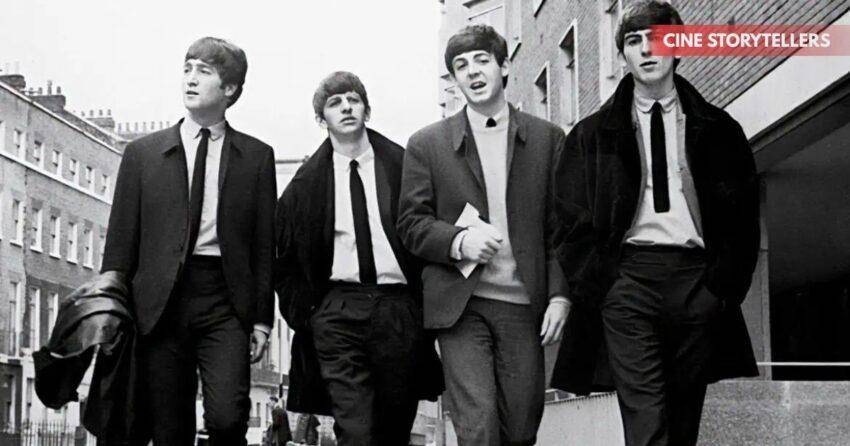
The Beatles are heading back to the big screen in a way audiences have never seen before. Sony Pictures and director Sam Mendes have unveiled the first official images from The Beatles – A Four-Film Cinematic Event, starring Paul Mescal, Barry Keoghan, Harris Dickinson, and Joseph Quinn as the Fab Four. Instead of a single biopic, the project will consist of four interconnected films, each told from the perspective of one Beatle. With full access to the band’s legendary music and life stories, this ambitious project is already being hailed as a potential game-changer for music biopics.
The First Look That Set the Internet Buzzing
When the first photos from the upcoming Beatles films surfaced, they didn’t just drop quietly online—they exploded across social media. Fans instantly zeroed in on the transformations, debating hairstyles, expressions, and the uncanny resemblance in some cases.
The images show the four lead actors in period-accurate styling, clearly signaling that this project is aiming for authenticity rather than caricature. There’s no flashy over-stylization here. Instead, the first look feels grounded, intimate, and deliberately restrained, suggesting a more serious, character-driven take on the most famous band in music history.
This reveal wasn’t just about appearances. It was a statement of intent.
Also Read : Caitlin O’Connor: Job, Background & Why Joe Manganiello’s Fiancée Moved to Pittsburgh
A Four-Film Beatles Event: What Makes This Different
Most music biopics follow a familiar formula: humble beginnings, meteoric rise, internal conflict, and a dramatic ending—all packed into two or three hours. This Beatles project throws that formula out entirely.
Instead of one film, audiences will get four separate feature films, each focused on one member of the band:
- One film from Paul McCartney’s perspective
- One from John Lennon’s
- One from George Harrison’s
- One from Ringo Starr’s
All four films are designed to interlock, covering overlapping events but filtered through different emotional and personal lenses. It’s an ambitious narrative experiment that mirrors how history itself is subjective—especially within a band as creatively and personally complex as The Beatles.
Paul Mescal as Paul McCartney: Inspired Casting or Risky Choice?

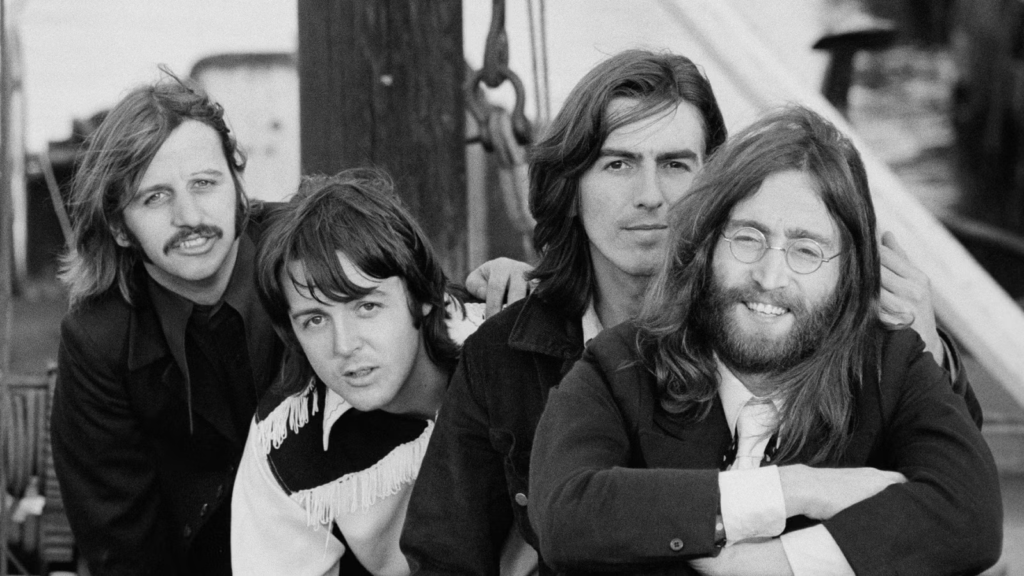
Casting Paul Mescal as Paul McCartney initially raised eyebrows, but the first images have gone a long way toward winning skeptics over.
Mescal brings a thoughtful, introspective screen presence that aligns well with McCartney’s often misunderstood persona. While Paul is frequently seen as the “cheerful” Beatle, his role within the band was far more nuanced—balancing creative leadership, emotional sensitivity, and immense pressure.
Early impressions suggest Mescal isn’t trying to imitate McCartney beat-for-beat. Instead, he appears to be channeling the internal life behind the public image, which may ultimately prove more compelling than surface-level mimicry.
The Rest of the Fab Four: Casting That Sparks Conversation
The remaining casting choices have been just as closely scrutinized.
Harris Dickinson as John Lennon
Dickinson’s sharp features and intense gaze hint at a portrayal that leans into Lennon’s contradictions—charisma mixed with anger, idealism tangled with insecurity.
Joseph Quinn as George Harrison
Quinn’s casting feels particularly inspired. Harrison’s quiet spirituality and simmering frustration often played second fiddle to Lennon and McCartney, and Quinn’s ability to convey depth without excess could finally give George the cinematic focus he deserves.
Barry Keoghan as Ringo Starr
Keoghan may be the most surprising choice, but also one of the most intriguing. Known for his unpredictable energy, he has the potential to reveal layers of Ringo that go beyond the easygoing drummer stereotype.
Together, the four actors don’t just resemble The Beatles—they feel like a band.
Sam Mendes and the Weight of Storytelling History
Handing this project to Sam Mendes was a deliberate move. Mendes has built a career on emotionally rich, character-focused films, often dealing with legacy, identity, and human contradiction.
What Mendes brings to the table is restraint. Rather than leaning into nostalgia or spectacle, his work tends to focus on:
- Emotional truth over mythmaking
- Intimate moments over grand recreations
- Character psychology over fan service
For a story as mythologized as The Beatles, that approach may be exactly what’s needed.
Full Music Rights: A Historic First for Beatles Films
One of the most significant aspects of this project is something fans can’t see in a photo: full access to The Beatles’ music catalog.
This marks the first time a narrative film project has been granted full life rights and music rights by Apple Corps and the band’s estates. That means the films can use original recordings and compositions in context, rather than relying on covers or brief excerpts.
This alone sets the project apart from nearly every previous Beatles-related movie and dramatically raises expectations.
Also Read : Sly Dunbar Dead at 73: Reggae Icon & Drummer Who Revolutionized Music
Why Four Perspectives Matter More Than One Timeline
The Beatles’ story has been told countless times—but usually from the outside. What this project promises is something more intimate.
By telling the story four times, from four viewpoints, the films can explore:
- How creative partnerships feel different depending on who you are
- How the same argument can carry different emotional weight
- How fame affects individuals in radically different ways
This structure acknowledges a simple truth: there was never a single “Beatles story.” There were four.
Release Strategy: A Bold Move in Modern Cinema
All four films are scheduled for a simultaneous theatrical release, a decision that’s as risky as it is exciting.
Rather than spacing the films out, Sony is positioning this as a true cinematic event—encouraging audiences to immerse themselves fully in the experience. Whether viewers choose to watch one, two, or all four, the project invites conversation, comparison, and repeat viewing.
It’s a gamble, but one that reflects confidence in both the material and the audience.
How This Project Reflects a New Era of Biopics
In recent years, audiences have grown more critical of traditional biopics. There’s a growing demand for honesty, complexity, and emotional depth rather than glossy highlight reels.
This Beatles project fits squarely into that shift. Instead of simplifying the band’s story, it leans into contradiction:
- Creative genius alongside emotional damage
- Brotherhood alongside rivalry
- Cultural revolution alongside personal collapse
It’s less about celebrating icons and more about understanding human beings.
Fan Reactions: Excitement, Skepticism, and High Expectations
Unsurprisingly, reactions have been mixed—and that’s not a bad thing.
Some fans are thrilled by the ambition and casting. Others remain cautious, wary of seeing sacred musical history dramatized once again. But nearly everyone agrees on one point: this project feels different.
That sense of difference is what keeps the conversation alive—and what gives the films a chance to matter beyond opening weekend.
Why These Beatles Movies Could Leave a Lasting Legacy
If successful, The Beatles – A Four-Film Cinematic Event could reshape how legendary artists are portrayed on screen.
Rather than compressing greatness into digestible myth, it offers space for contradiction, failure, and growth. It treats its subjects not as monuments, but as people—brilliant, flawed, and forever changed by fame.
For a band that changed music forever, that approach feels fitting.
Also Read : Josh Gad’s Gerron’s Last Film: True Story, Director Simon Curtis & Full Movie Details
FAQs
What is The Beatles – A Four-Film Cinematic Event?
It’s a series of four interconnected feature films, each told from the perspective of one member of The Beatles.
Who plays Paul McCartney in the movies?
Paul Mescal has been cast as Paul McCartney.
Who is directing the Beatles films?
All four films are directed by Sam Mendes.
Will the movies use original Beatles music?
Yes. The project has full access to the band’s music catalog and life rights.
When will the Beatles movies be released?
All four films are scheduled for a simultaneous theatrical release in 2028.
Why are there four separate films instead of one?
The structure allows the story to be told from four unique perspectives, reflecting the individual experiences of each Beatle.
Join our WhatsApp channel for more updates and information about celebrities and entertainment.


I’m Atul Kumar, founder of Cine Storytellers and an entertainment creator with 5+ years of experience. I cover films, celebrities, music, and OTT content with a focus on accurate, ethical, and engaging storytelling. My goal is to bring readers trustworthy entertainment news that informs, inspires, and goes beyond gossip.