
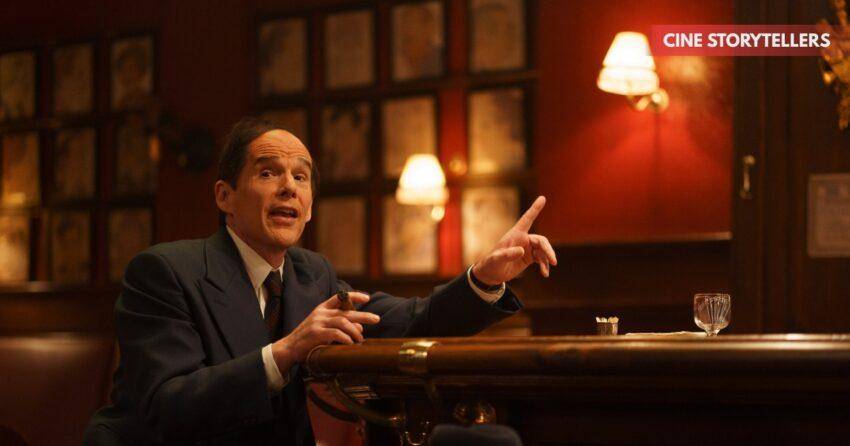
Blue Moon is Richard Linklater’s latest triumph, a meticulously crafted character study set against the backdrop of 1940s Broadway. Centered on lyricist Lorenz Hart, the film chronicles a single, emotionally charged night as Hart grapples with fading fame, personal regrets, and the stark contrast between ambition and reality. Ethan Hawke delivers a transformative performance, bringing depth, charm, and vulnerability to a complex character. With its sharp dialogue, intimate cinematography, and thoughtful exploration of creativity and loneliness, Blue Moon offers more than a period piece—it’s a reflective journey into the human psyche and the life of an overlooked genius.
A Night That Defines a Career
The story unfolds over one night in 1943, the premiere night of Oklahoma!, which becomes a monumental success. While the world celebrates this milestone, Lorenz Hart, played by Ethan Hawke, faces the harsh realities of professional displacement and personal insecurity. The tension between Hart’s legacy and his current marginalization drives the narrative, making this night both pivotal and symbolic.
By focusing on a confined timeframe and setting, Linklater emphasizes emotional immediacy. The audience is drawn into Hart’s inner world, experiencing his fears, frustrations, and fleeting joys as if alongside him in real time.
Also Read : Masters of the Universe Teaser Breakdown: Cast, Story, Release Date & What It Means
Ethan Hawke: A Career-Defining Performance

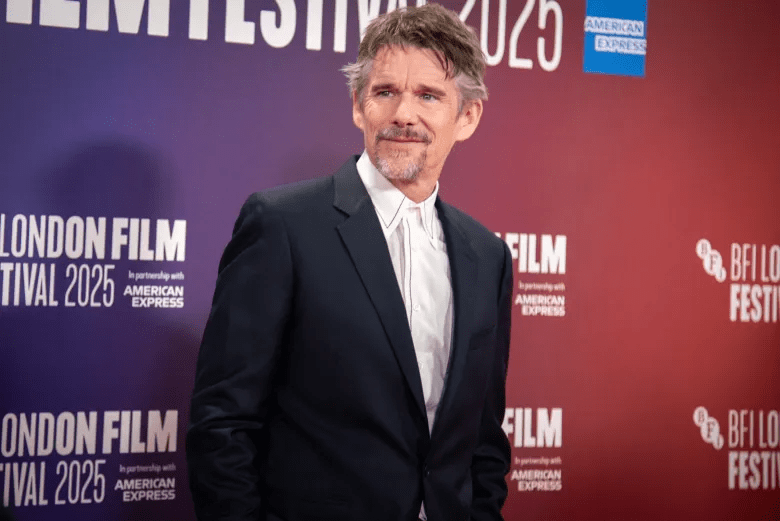
Hawke’s portrayal of Lorenz Hart is the emotional heartbeat of Blue Moon. Every glance, gesture, and nuance conveys a man grappling with genius, pride, and self-doubt. Hawke underwent a physical transformation for the role, altering posture, facial expressions, and movements to fully embody Hart’s insecurities.
His performance strikes a delicate balance: Hart is both flawed and charismatic, bitter yet endearing. Hawke allows audiences to empathize with a man whose brilliance is shadowed by personal demons, creating a portrait that feels lived-in and hauntingly authentic.
Dialogue and Intimacy Drive the Film
Unlike conventional period dramas, Blue Moon thrives on dialogue and subtle interaction. The bulk of the action takes place in a single bar and nearby streets, emphasizing conversation, reflection, and quiet observation.
The screenplay, rich in poetic language and theatrical rhythm, allows characters to reveal themselves organically. Each exchange feels purposeful, shedding light on Hart’s complex relationships with friends, rivals, and strangers. The result is a cinematic experience that feels like a living stage play, where every word carries weight.
Richard Linklater’s Quiet Mastery
Linklater’s signature approach is evident throughout Blue Moon. He uses restrained camera work, naturalistic lighting, and measured pacing to create intimacy without intrusion. Long takes allow Hawke’s performance and supporting actors to breathe, making every subtle expression count.
This understated direction is deliberate. By avoiding flashy techniques, Linklater ensures that character, emotion, and dialogue remain the focus. It’s a hallmark of his style, seen in previous works like the Before trilogy and Boyhood, where human experience is foregrounded over spectacle.
Supporting Cast That Enriches the Story
The supporting ensemble complements Hawke brilliantly. Andrew Scott portrays Richard Rodgers with understated depth, reflecting admiration, tension, and lingering frustration. Margaret Qualley plays Elizabeth Weiland, offering both warmth and a mirror to Hart’s insecurities. Bobby Cannavale’s Eddie adds levity and grounded perspective, interacting with Hart in ways that reveal character layers without overshadowing the lead.
Each performance contributes to the film’s immersive quality. By giving equal attention to secondary characters, Linklater crafts a community around Hart that feels lived-in and authentic.
Themes: Creativity, Loneliness, and Impermanence
At its core, Blue Moon explores the human cost of brilliance. Hart’s journey reveals the loneliness inherent in artistic pursuit, the fragility of reputation, and the bittersweet nature of recognition.
Music is central to the narrative, not only as Hart’s career but as an emotional barometer. The lyrics, melodies, and songs echo the character’s internal struggles, highlighting themes of longing, ambition, and missed opportunity.
Additionally, the film subtly addresses the constraints of identity and societal expectation in the 1940s. Hart’s personal and professional conflicts reveal broader issues of acceptance, creativity, and legacy.
Also read : Vanna White Marries John Donaldson: Wedding Details, Love Story & What’s Next
Historical Context and Immersive Atmosphere
Blue Moon excels in capturing 1940s Broadway without relying on spectacle. The bar setting, period-accurate costumes, and meticulous set design evoke the era authentically, immersing audiences in the cultural and social atmosphere.
The contrast between public celebration (Oklahoma!’s premiere) and Hart’s private turmoil underscores the film’s central tension: the world may be moving forward, but individual brilliance and suffering often remain unseen.
Why the Film Resonates
Blue Moon resonates because it blends technical mastery with profound human insight. It is not just a period drama; it is a meditation on time, memory, and the fleeting nature of success.
The film challenges viewers to reflect on their own ambitions, regrets, and interpersonal connections. Its appeal lies in its ability to be both specific—a single man on a single night—and universal, exploring emotions and struggles recognizable to any audience.
Visual Style and Cinematic Choices
Linklater’s visual strategy reinforces intimacy. Close-ups capture the subtleties of expression, while long, unbroken shots allow viewers to inhabit scenes fully. Lighting is used sparingly but effectively, casting shadows that echo Hart’s mood.
The cinematography balances warmth and melancholy, mirroring the dualities present in Hart’s experience: charm and self-doubt, humor and bitterness, brilliance and vulnerability.
Pacing and Storytelling
The film’s pace is deliberate, mirroring the contemplative nature of Hart’s night. There is no rush to climax or resolution; instead, the story unfolds organically. Audiences are invited to linger in moments of dialogue, observation, and reflection, which strengthens emotional engagement and character depth.
While this approach may challenge viewers expecting conventional plot-driven storytelling, it rewards patience with an immersive and resonant experience.
Awards Potential
Blue Moon is already generating awards-season buzz, particularly for Hawke’s performance and Linklater’s screenplay. Its focus on character, dialogue, and subtle emotional exploration positions it well for acting, writing, and potentially Best Picture consideration in niche categories that favor intimate, performance-driven cinema.
The film’s restrained style, while unconventional, aligns with critics’ growing appreciation for nuanced storytelling and historically rich character studies.
Audience Takeaways
Audiences can expect an emotionally rich, dialogue-heavy film that prioritizes authenticity and character over spectacle. Key takeaways include:
- Insight into the emotional and professional life of a genius overshadowed by time and circumstance.
- Reflection on the intersection of fame, creativity, and personal struggle.
- Appreciation for understated filmmaking that foregrounds performance, dialogue, and atmosphere.
For those seeking a conventional musical drama, Blue Moon may feel slow. For those invested in nuanced character studies, it is deeply rewarding.
Also Read : Phil Collins Health Update 2026: Knee Surgeries, 24-Hour Care, Sobriety & Life Today
FAQs
What is Blue Moon about?
Blue Moon follows Broadway lyricist Lorenz Hart during one pivotal night, exploring his personal insecurities, professional challenges, and emotional journey.
Who stars in the film?
Ethan Hawke leads as Lorenz Hart, supported by Andrew Scott, Margaret Qualley, and Bobby Cannavale.
Who directed Blue Moon?
Richard Linklater directed the film, continuing his exploration of human intimacy and lived experience.
When was it released?
The film premiered in 2025, with limited theatrical release and digital availability following.
Why is Blue Moon significant?
It offers a deep, emotionally resonant character study, showcasing Ethan Hawke’s transformative performance and Linklater’s mastery of intimate, dialogue-driven cinema.
Join our WhatsApp channel for more updates and information about celebrities and entertainment.


I’m Atul Kumar, founder of Cine Storytellers and an entertainment creator with 5+ years of experience. I cover films, celebrities, music, and OTT content with a focus on accurate, ethical, and engaging storytelling. My goal is to bring readers trustworthy entertainment news that informs, inspires, and goes beyond gossip.