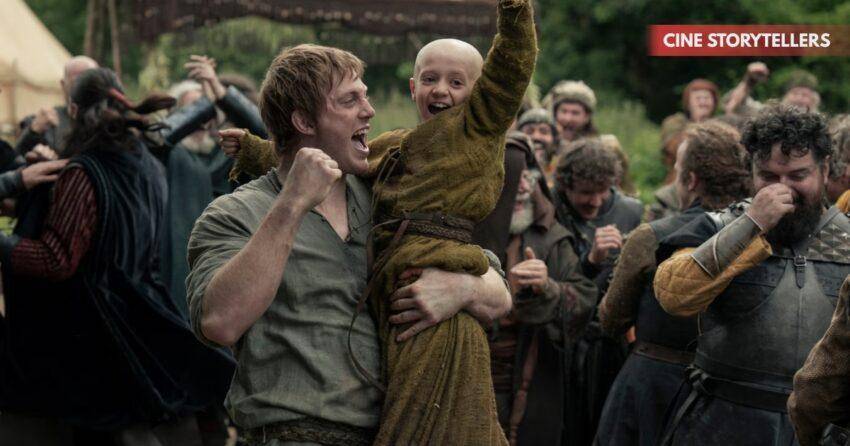
The Season 1 premiere of A Knight of the Seven Kingdoms introduces viewers to a very different side of Westeros. Set decades before Game of Thrones, the episode follows Ser Duncan the Tall, an inexperienced hedge knight, and a sharp-tongued boy named Egg as they begin an unlikely partnership. Instead of palace intrigue and large-scale war, the premiere focuses on honor, humility, and survival on the margins of society. This recap breaks down the episode scene by scene, explores its major themes, and explains why this new series may become the most emotionally grounded story in the Game of Thrones universe.
A Knight of the Seven Kingdoms Opens with a New Kind of Westeros
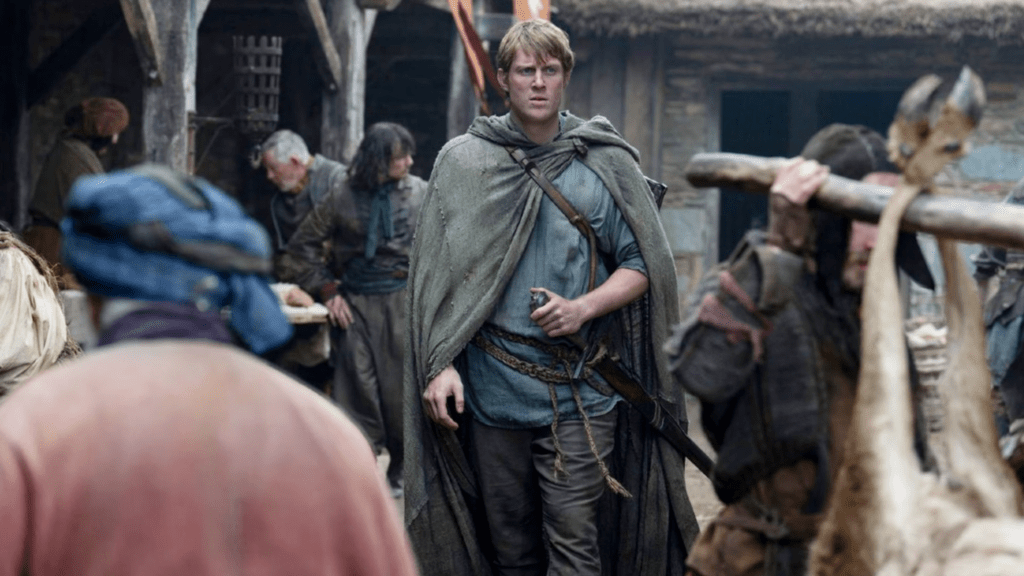
From its very first moments, A Knight of the Seven Kingdoms makes it clear that this is not Game of Thrones all over again. Yes, the setting is familiar. Yes, swords, sigils, and social hierarchies still matter. But the tone feels different—quieter, warmer, and more personal.
The premiere opens away from castles and councils, placing us alongside a lone traveler in the woods. That traveler is Ser Duncan the Tall, known simply as Dunk. He is not a famous knight, not a lord, and not someone whose name commands instant respect. Instead, he is just a man trying to decide who he is now that his mentor is gone.
This opening immediately signals that the story ahead will focus less on power and more on people.
Meet Ser Duncan the Tall: A Knight Without a Name
Dunk is introduced at a moment of loss. His mentor, Ser Arlan of Pennytree, has died, leaving Dunk alone with a sword, a shield, and a title he barely feels worthy of using. Dunk buries Ser Arlan himself, a quiet and emotional scene that establishes both his loyalty and his uncertainty.
What makes Dunk compelling is not skill alone, but vulnerability. He wants to be a true knight, not just in name, but in spirit. Yet he quickly realizes that in Westeros, honor does not always open doors. Reputation, lineage, and wealth matter far more.
The episode carefully shows Dunk’s internal conflict: he believes in chivalry, but he is entering a world that often punishes idealism.
The Decision to Enter the Tournament
After burying his mentor, Dunk sets his sights on the tournament at Ashford Meadow. For a hedge knight, tournaments are one of the few chances to earn money, recognition, and legitimacy. Winning—or even performing well—can change a life.
But the road to Ashford Meadow reveals just how unprepared Dunk is for the realities of knighthood. He struggles with basic logistics, lacks proper equipment, and has no squire to assist him. These details ground the story, reminding viewers that heroism often starts with discomfort and doubt.
The tournament represents hope, but also risk. Dunk is betting everything he has on a chance to prove himself.
Enter Egg: The Boy Who Changes Everything
One of the most important moments in the premiere arrives when Dunk meets Egg. At first glance, Egg seems like a nuisance: a bald, bold, sharp-witted boy who inserts himself into Dunk’s journey without invitation.
Egg insists on becoming Dunk’s squire, despite Dunk’s repeated attempts to send him away. What starts as irritation slowly turns into reluctant acceptance. Egg is observant, resourceful, and far more knowledgeable than he initially appears.
Their relationship becomes the emotional core of the episode. Dunk provides strength and protection; Egg provides insight and perspective. Together, they form a partnership built not on status, but mutual need.
Ashford Meadow: A World of Unequal Rules
When Dunk finally reaches Ashford Meadow, the contrast between expectation and reality becomes painfully clear. Tournaments may celebrate honor in theory, but in practice they are dominated by noble families and powerful houses.
Dunk struggles to register because he lacks a sponsor. Other knights look down on him for being a hedge knight, treating his ambition as arrogance. The premiere uses these moments to quietly critique the rigid class system of Westeros.
Here, we see that bravery alone does not earn respect. Dunk must navigate a social order designed to keep people like him on the margins.
Familiar Names and Subtle Worldbuilding
The episode introduces several characters who hint at the larger world beyond Dunk and Egg’s immediate story. Noble knights, minor lords, and recognizable house names appear, grounding the show firmly within established lore.
However, these characters never overshadow Dunk’s journey. Instead of focusing on dynastic politics, the premiere uses these encounters to highlight how small Dunk is in a very large world.
This restrained approach to worldbuilding allows new viewers to follow the story easily while rewarding longtime fans with subtle connections.
Humor That Feels Earned, Not Forced
One of the most surprising aspects of the premiere is its humor. Unlike the dark wit of Game of Thrones, the humor here feels gentle and situational. It comes from awkward moments, misunderstandings, and the contrast between Dunk’s ideals and reality.
Egg’s dialogue, in particular, adds levity without undercutting emotional weight. His curiosity and blunt observations keep scenes from becoming overly grim.
This balance of humor and sincerity helps the episode feel approachable while still respecting the gravity of the setting.
Also Read : Jason Williamson & Sleaford Mods: Life, Addiction, Fatherhood & Music Journey
Honor Versus Reality: The Central Theme
At its heart, Episode 1 is about the tension between honor and survival. Dunk wants to live by the knightly code he learned from Ser Arlan, but he quickly learns that the world does not always reward goodness.
The premiere does not mock Dunk for his ideals. Instead, it presents them as something fragile and rare—worth protecting even when they cause hardship.
This thematic focus sets A Knight of the Seven Kingdoms apart from other entries in the franchise. Rather than asking who should rule, the show asks what it means to be good in an unfair world.
Egg’s Secrets and Hints of Something More
While Egg initially appears to be just a clever streetwise boy, the premiere drops subtle hints that there is more to him than meets the eye. His knowledge of politics, his confidence around knights, and his insistence on staying with Dunk suggest a deeper backstory.
These hints are never overplayed. Instead, they create quiet intrigue, encouraging viewers to pay attention rather than wait for dramatic reveals.
Egg’s mystery adds narrative momentum without shifting focus away from character development.
A Smaller Story That Feels Bigger in Meaning
Unlike previous Game of Thrones series, this premiere avoids massive set pieces and shocking twists. Instead, it invests in emotional clarity. Every scene moves the characters forward, not toward war, but toward understanding themselves.
This smaller scale makes the story feel more intimate—and, paradoxically, more impactful. By focusing on everyday struggles, the show reminds us that history is shaped not just by kings, but by ordinary people making difficult choices.
Also Read : Amy Redford on Robert Redford’s Death: Daughter’s Emotional Interview
Why the Premiere Works So Well
The success of Episode 1 lies in its restraint. It trusts the audience to engage with character rather than spectacle. It introduces conflict without rushing toward violence. And it allows Dunk and Egg’s bond to develop naturally.
For longtime fans of the franchise, the episode offers a refreshing change of pace. For newcomers, it provides an accessible entry point into Westeros without requiring encyclopedic knowledge.
What the Premiere Sets Up for the Season
By the end of the episode, Dunk has not yet proven himself, and Egg has not yet revealed his full truth. That unfinished feeling is intentional. The premiere is not about resolution—it’s about direction.
Future episodes promise tournaments, rivalries, moral tests, and deeper exploration of what knighthood truly means. But if Episode 1 is any indication, those elements will always serve character first.
Why A Knight of the Seven Kingdoms Feels Timely
In a television landscape crowded with dark fantasy, this series stands out by embracing empathy. Its premiere suggests a story interested less in domination and more in decency.
That focus makes the show feel timely. In a world where power often overshadows principle, Dunk’s quiet determination feels radical.
Final Thoughts on the Season 1 Premiere
A Knight of the Seven Kingdoms begins not with fire or blood, but with a grave, a promise, and a journey. Episode 1 lays a strong foundation for a story about friendship, integrity, and perseverance.
It may not be the loudest entry in the Game of Thrones universe—but it may become one of the most meaningful.
Also Read : Dolly Parton at 80: Journey from a One-Room Cabin to Worldwide Fame
FAQs
What is A Knight of the Seven Kingdoms about?
The series follows Ser Duncan the Tall, a hedge knight, and his young companion Egg as they travel through Westeros, decades before the events of Game of Thrones.
Is this series connected to Game of Thrones?
Yes, it is set in the same universe but focuses on smaller-scale stories and personal journeys rather than large political conflicts.
Who are Dunk and Egg?
Dunk is an inexperienced but honorable knight, while Egg is a clever boy who becomes his squire and traveling companion.
How is this show different from House of the Dragon?
This series emphasizes character, humor, and morality over large-scale war and palace intrigue.
Is the premiere suitable for new viewers?
Yes, the episode is accessible to newcomers and does not require deep knowledge of previous series.
Join our WhatsApp channel for more updates and information about celebrities and entertainment.

I’m Atul Kumar, founder of Cine Storytellers and an entertainment creator with 5+ years of experience. I cover films, celebrities, music, and OTT content with a focus on accurate, ethical, and engaging storytelling. My goal is to bring readers trustworthy entertainment news that informs, inspires, and goes beyond gossip.
Discover more from Cine Storytellers
Subscribe to get the latest posts sent to your email.