
Day of the Flowers tells the story of two Scottish sisters who travel to Cuba to scatter their late father’s ashes. What begins as a heartfelt mission soon unravels into a chaotic adventure filled with cultural clashes, romantic interludes, comedic mishaps, and emotional confrontations. The film offers colour, music, and heartfelt moments, but it also struggles with tonal shifts and an overstuffed script. This review dives deep into the film’s artistic intentions, strengths, shortcomings, characters, and cultural atmosphere — providing a comprehensive, polished, and human-sounding analysis ready for publication.
Day of the Flowers (2012) Review: A Colourful, Flawed, but Well-Meaning Journey
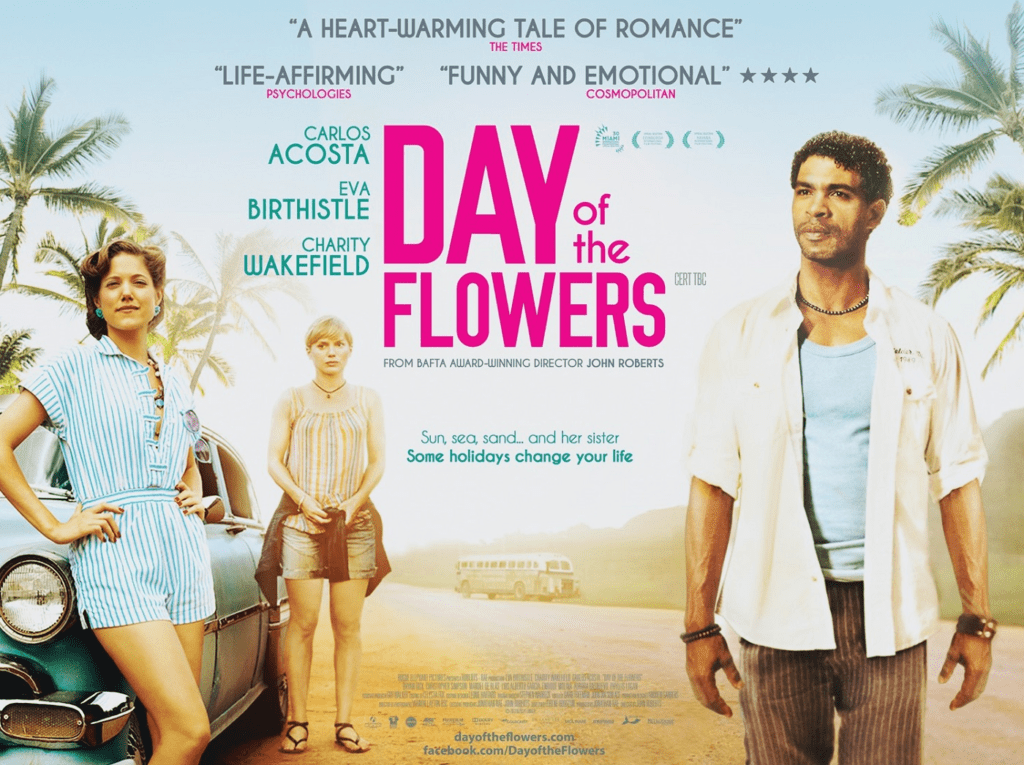
Few films balance charm, chaos, cultural exploration, and emotional tension quite like Day of the Flowers. Set partly in Glasgow and largely in vibrant Cuba, it follows two estranged sisters on a whirlwind journey to honour their father’s revolutionary past. On paper, it promises political echoes, family drama, dance, romance, and travelogue-style escapism. On screen, however, the film delivers something more uneven — at times delightful, at times disjointed.
Let’s break down what makes this film a fascinating, if flawed, cinematic experience.
A Story Rooted in Grief, Hope, and Idealism
At its heart, Day of the Flowers is about family and the complicated stories we inherit. Sisters Rosa and Ailidh, who share little beyond blood ties, decide to travel to Cuba to scatter their late father’s ashes. Their father was once a proud supporter of revolutionary Cuba, and the daughters hope this symbolic act will honour his legacy.
But from the moment they land in Havana, nothing goes as planned. Their father’s ashes go missing, they fall into unexpected friendships and problematic encounters, and a seemingly simple tribute turns into a chaotic cultural odyssey. What began as grief soon becomes a story about identity, truth, and how idealism sometimes falters when placed against reality.
The premise is strong, emotional, and full of potential. And in several moments, the film truly taps into that potential.
The Beauty of Cuba: A Living, Breathing Character
If there is one undeniable triumph in Day of the Flowers, it’s the depiction of Cuba itself. The film captures Havana in all its textured glory — colourful streets, faded colonial architecture, energetic dance halls, vintage cars, and a musical heartbeat that never seems to stop.
The cinematography lovingly portrays Cuba not as a postcard but as a place of contradictions: vibrant yet worn, hopeful yet burdened, joyful yet marked by history. The film’s location becomes an emotional anchor, reflecting the sisters’ journey — messy, warm, unpredictable, and full of life.
The music and dance sequences, too, add a flavour that can’t be faked. Scenes featuring ballet dancer Carlos Acosta (in a standout appearance) bring an authentic sense of rhythm, culture, and sensuality.
Moments That Shine: Heart, Humour, and Emotional Beats
Even critics who felt the film was uneven admit that it genuinely shines in quiet emotional moments. When the sisters reflect on their father’s past — and their own misconceptions about him — the film becomes touching and sincere. Grief is rarely tidy, and the film doesn’t try to oversimplify it.
There are also scenes filled with genuine humour: culture clashes, misunderstandings, and the antics of secondary characters add levity and charm. The film’s warmth, particularly in its first half, makes it easy to root for the characters, even when their decisions are questionable.
The sibling dynamic stands out most. Their bickering, their clashing personalities, and their gradual, reluctant bonding feel authentic. Their growth — even when inconsistently written — gives the audience something real to latch onto.
Where the Film Stumbles: Too Many Threads, Not Enough Focus
For all its strengths, Day of the Flowers struggles with coherence.
An Overcrowded Script
The biggest issue is simply that the story tries to do too much. Between the sisters’ personal journey, their father’s political past, Cuban culture, romance, crime elements, comedic side-plots, and dance sequences, the film becomes overcrowded.
Each storyline could have made a powerful movie on its own, but together, they compete for attention and occasionally undermine one another.
Tonally Uneven
One moment the film is a political drama.
The next, it’s a lighthearted comedy.
Then suddenly, it wants to be a romance — before veering into thriller territory.
These abrupt tonal shifts make it difficult to remain fully immersed. Instead of blending genres seamlessly, the film often feels like it’s juggling too many identities.
Characters That Don’t Fully Develop
Although the sisters are engaging, their personalities often slip into cliché — the idealistic activist and the carefree “party girl.” With more nuanced writing, their differences could have been explored with greater depth.
Supporting characters, too, feel underdeveloped. Some appear only briefly, seemingly to push the plot forward rather than contribute meaningfully to the narrative.
Why the Film Still Holds Value
Despite its uneven structure, Day of the Flowers has qualities that make it worth watching.
A Strong Emotional Core
The film’s emotional foundation — daughters grappling with a father they only half understood — gives it a universal appeal. Many viewers will connect with the struggle of piecing together a loved one’s past through fragments and memories.
Authentic Cultural Texture
The vivid portrayal of Cuba, from music to dance to daily life, brings a cultural richness that surpasses the average travel-drama. Even when the script falters, the atmosphere keeps you absorbed.
A Story About Imperfection
In a way, the film’s very messiness mirrors life: unpredictable, contradictory, beautiful, and flawed. The sisters’ journey reflects that reality, which gives the film a raw sincerity.
Final Verdict: A Flawed Yet Heartfelt Journey Worth Experiencing
Day of the Flowers is not a perfect film. It’s uneven, sometimes chaotic, and structurally overambitious. But it also carries warmth, sincerity, beautiful cinematography, and moments of emotional truth. Its exploration of identity, memory, and family — set against the vibrant pulse of Cuba — makes it a film that stays with you, despite its imperfections.
For viewers who enjoy colourful settings, culturally rich stories, and character-focused journeys, this film offers something meaningful. Just don’t expect a tightly polished narrative — expect heart, atmosphere, and an admirably ambitious attempt at storytelling.
Also Read : Tom Felton Recreates Draco Malfoy’s Iconic Line in Harry Potter
FAQs
Q1: What is Day of the Flowers about?
It follows two Scottish sisters who travel to Cuba to scatter their father’s ashes, but their plans spiral into chaos as they confront cultural realities, personal conflicts, and emotional truths.
Q2: Is the film based on real events?
No, it’s a fictional story, though it incorporates themes of political nostalgia, identity, and family memory.
Q3: What is the strongest part of the film?
The setting, cinematography, music, and cultural immersion — particularly the Cuban dance sequences — stand out as the film’s biggest strengths.
Q4: Who will enjoy this film?
Fans of character-driven dramas, international settings, musical elements, and emotional journeys will likely appreciate it.
Q5: What holds the film back?
Its overcrowded script, uneven tone, and underdeveloped characters prevent it from reaching its full potential.
Join our WhatsApp channel for more updates and information about celebrities and entertainment

I’m Atul Kumar, founder of Cine Storytellers and an entertainment creator with 5+ years of experience. I cover films, celebrities, music, and OTT content with a focus on accurate, ethical, and engaging storytelling. My goal is to bring readers trustworthy entertainment news that informs, inspires, and goes beyond gossip.
Discover more from Cine Storytellers
Subscribe to get the latest posts sent to your email.